

 Aug 17
A flat piece of cardboard enters one end of the machine. A sealed, coded, leaflet-loaded carton exits the other—often in under a second. The transformation happens so quickly that it can seem like magic. But behind that speed is a precisely orchestrated sequence of mechanical and servo-controlled actions, each one timed to within fractions of a second.
Understanding how a cartoning machine works step by step is essential for anyone specifying, operating, or maintaining one. It helps you diagnose jams, evaluate machine designs, and make better decisions about which cartoner fits your product line.
This guide walks through the complete cartoning cycle—from blank magazine to finished carton—explaining what happens at each station and why it matters to your operation.
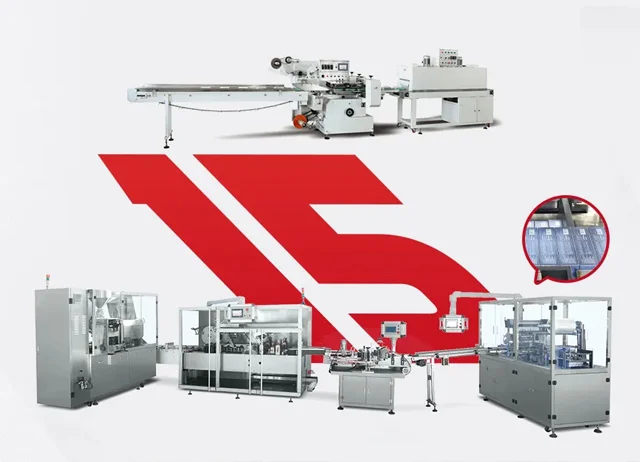
Most automatic cartoning machines—whether horizontal or vertical, intermittent or continuous motion—follow the same fundamental six-station cycle. Each station performs a specific function in the journey from flat blank to sealed carton.
| Station | Function | What Happens |
| 1. Carton Erecting | Opens a flat blank into a 3D carton | Vacuum suction pulls a blank; mechanical guides square it open |
| 2. Product Feeding | Brings product to the loading point | Conveyors, feeders, or robots deliver product in sync with carton cycle |
| 3. Leaflet Folding & Staging | Creases and positions inserts | Folding device creases leaflet 1-4 times; stages it alongside product |
| 4. Loading | Places product into the carton | Pusher slides product sideways (horizontal) or drops from above (vertical) |
| 5. Coding & Closing | Prints date/ batch and seals carton | Embossing or printing applied; flaps closed by tuck or glue |
| 6. Rejection & Output | Removes defective cartons | Sensors check for missing product; rejects are diverted; good cartons exit |
The following sections explain each station in detail, including variations between horizontal and vertical machines.
To see how these six stations are implemented across different speed and product configurations, you can review the cartoning platforms available for various applications.
Learn more: View our Automated Cartoning Machine Product Series
The process begins at the carton magazine, where flat, folded carton blanks are stacked. A vacuum suction cup pulls one blank from the magazine, and mechanical guides square it open into a three-dimensional carton held ready for loading.
In a typical horizontal cartoner, the flat blank is pulled from the magazine by a rotary vacuum head, erected automatically, and placed into a flighted chain. The erection process involves folding the carton body into a generally U-shape along its pre-scored folding lines.
The machine's guide rails clamp the carton, and a push plate opens it. Two plywood sections rise from both sides of the guide rail to clamp the carton sides from front to back, so the carton opens at a right angle and moves forward to the filling area.
The speed at which blanks can be erected without crushing or jamming sets the upper limit for the entire machine's cycle time. A machine with a poorly designed erecting mechanism will have constant jams and downtime, regardless of how fast the rest of the cycle runs.
Key design considerations:
Blank quality: The paperboard must have consistent scoring and be within the specified grammage range (KAIXIANG cartoners typically require 250-450g/m²)
Vacuum system: Suction must be strong enough to reliably pull one blank at a time from the magazine
Changeover: For multi-SKU operations, the magazine and guides must be adjustable to handle different blank sizes
External source: According to a patent for a cartoning machine, the erection process involves folding the carton body into a generally U shape along pre-scored folding lines, with a pusher then pushing the product against the U-folded carton to complete the wrap.
While the carton is being erected, the product is brought to the loading point in time. The feeding method depends on the product type.
| Product Type | Feeding Method | Description |
| Flat items (blister cards, sachets) | Conveyor and grouping system | Products are oriented and grouped for simultaneous loading |
| Round items (bottles, tubes) | Automatic bottle feeder | Singulates and orients round products for consistent infeed |
| Bulk items (capsules, sachets) | Weight/count feeder | Meters an exact number of pieces for each carton |
| Irregular items | Robotic pick-and-place | Robot picks products and positions them into the carton |
The product feeder must deliver the product to the loading station at exactly the same moment the erected carton arrives. In servo-driven machines, this synchronization is achieved through electronic cams and precise speed control.
As one industry expert notes: “If you're specifying a cartoner, watch the feeder, not the headline speed. The cartoning cycle itself is mature—every builder does the six stations. Where machines actually differ is how they feed your specific product into station four. Get the feeder wrong, and the most expensive cartoner in the world will jam.”
If the pack requires an instruction leaflet—common in pharmaceutical and some consumer goods—a folding device creases the insert one to four times down to a size that fits the carton, then stages it next to the product so the two load together.
In pharmaceutical packaging, the leaflet is often a regulatory requirement. Without it, the package is non-compliant. The leaflet station must fold consistently and stage the insert in perfect alignment with the product for simultaneous loading.
Key verification: Sensor systems verify that both the product and the leaflet are actually present before the carton proceeds to closing. A “no leaflet, no carton” interlock prevents incomplete packs from being shipped.
Product and leaflet are placed into the carton. The loading method depends on whether the machine is a horizontal end-loader or a vertical top-loader.
In a horizontal cartoning machine, the product slides smoothly into the carton from the side. A pusher mechanism pushes the product and leaflet sideways through the open end of the carton.
Advantages: High speed, suitable for a wide range of stable products
Typical applications: Blister packs, sachets, tubes, bottles
In a vertical cartoning machine, products are dropped or placed into the carton from above. The carton is held upright during loading.
Advantages: Gentle on fragile products; suitable for upright items
Typical applications: Bottles, vials, ampoules, counted items
Sensors verify at this point that both the product and the leaflet are actually present. In advanced machines, this includes weight checkers or vision inspection systems to validate the contents.
After loading, the batch number and expiry date are embossed or printed on the carton, then both ends are closed.
The batch number, expiry date, and sometimes regulatory codes (e.g., serialization codes for pharmaceuticals) are applied. This can be done by:
Hot stamp embossing
Thermal inkjet printing
Laser coding
| Method | Description | Best For |
| Tuck-in tongue | Mechanical flap is inserted into a slit in the carton | Standard retail cartons; easy opening for consumers |
| Hot-melt glue | Adhesive is applied to flaps; flaps are pressed and held until glue sets | Tamper-evident shipping cases; products requiring secure seals |
| Combination | Tuck plus glue for maximum security | Premium or regulated products |
In the closing station, the machine first bends the carton's tongue, then a push plate pushes the box cover to bend so the tongue can be inserted into the box. For glue sealing, hot melt adhesive is applied to the inner surfaces of the flaps, and the flaps are pressed together for a set time to allow the adhesive to cure.
Any carton that failed a check—missing product, missing leaflet, bad close, incorrect code—is automatically pushed off the line before it reaches the finished goods area.
As one packaging engineer puts it: “People think the clever part of a cartoner is the loading. It isn't—it's the rejection. Any machine can push a product into a box. A good machine knows when the box is wrong and stops it from leaving. The detect-and-reject station is where a $30,000 cartoner earns its keep, because one empty box shipped to a pharmacy is a recall, not a saving.”
Reject gates: Divert defective cartons to a separate chute
Air blast: Compressed air pushes defective cartons off the conveyor
Pusher mechanisms: Mechanical arm pushes defective cartons to a reject bin
Good cartons are counted and conveyed out, ready for the checkweigher, case packer, or downstream line.
For industry‑specific cartoning requirements, browse our packaging solutions for different sectors, covering Food & Beverage, Pharmaceutical Product Applications, and Daily Use Product Applications.
While the six-station cycle is universal, the implementation differs between horizontal and vertical machines.
| Characteristic | Description |
| Loading direction | Side (horizontal push) |
| Carton orientation | Carton opening faces horizontally |
| Typical speed | 30-200+ boxes/min |
| Best for | Stable products that can be pushed; high-volume lines |
| Common industries | Food, pharma, daily chemical |
| Characteristic | Description |
| Loading direction | Top (vertical drop) |
| Carton orientation | Carton held upright |
| Typical speed | 20-60 boxes/min |
| Best for | Fragile or upright products; precise weight control |
| Common industries | Food (nuts, confectionery), pharma (vials, ampoules) |
KAIXIANG's KXZ-130B, for example, is a horizontal cartoning machine that handles stick packs and other stable products at 30-100 boxes per minute, with box size ranges from (70-250) × (50-120) × (35-105)mm.
The station sequence is the same, but the motion type affects how the cycle is timed.
The carton chain advances, stops, advances, stops. During each stop, all operations (erection, loading, closing) occur while the carton is stationary.
Typical speed: 40-120 cartons per minute
Best for: Products requiring precise positioning; frequent changeovers; moderate volumes
The carton chain moves constantly. Operations are timed by servo-controlled mechanisms that move with the carton.
Typical speed: 120-300+ cartons per minute
Best for: High-volume, dedicated lines; products that tolerate movement during loading
Once you understand the basic cartoning cycle, the next consideration is how motion technology affects performance.
As a next step, you can explore our comparison of Continuous-Motion vs Intermittent-Motion Cartoners, or look forward to our upcoming article on cartoner selection criteria for different product types.
Glue Seal vs Tape Seal: Which Case Closure Method Fits Your Supply Chain?
How to Calculate Your True Throughput Requirement for Cartoning Lines
Accumulation Conveyor Selection for Lightweight Flexible Pouches
Rejection System Design: Ensuring Zero-Defect Carton Output
Sep 14,2026
Aug 31,2026 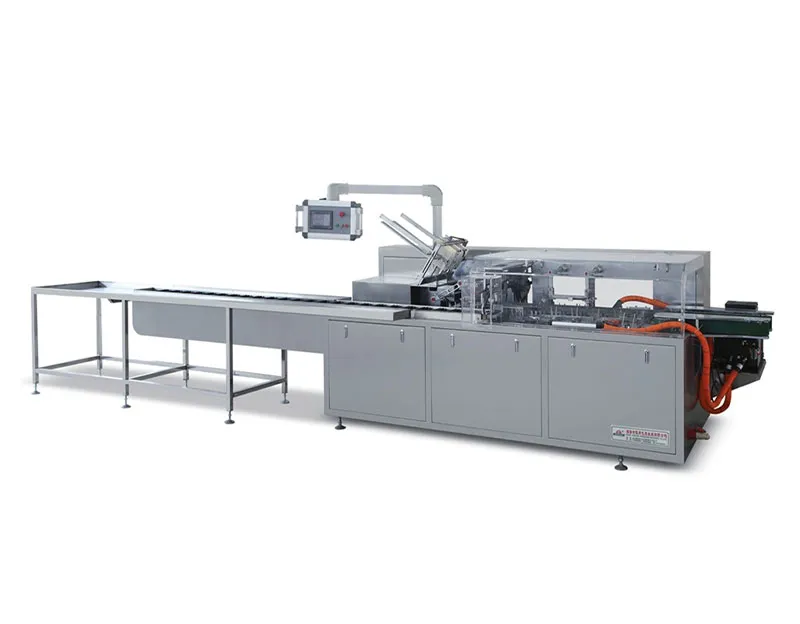
GET A QUOTE