

 Oct 20
A vertical cartoning machine loads product from above into an upright carton. Whether it runs stably depends less on the machine category and more on four conditions: whether the product can be presented and released consistently above the carton, whether the carton opens and stays open under the load, whether the infeed rhythm matches the cartoner cycle, and whether the rated speed matches the actual production rhythm across shifts and SKUs. A supplier’s FAT should prove these conditions with the buyer’s real product and carton, not with ideal samples.

Before comparing models, buyers should document the conditions the machine will actually face. The following checklist is more useful than a feature list because it forces the selection conversation onto verifiable operating conditions.
If these conditions are not documented before selection, the machine may run well in a demo and poorly in production.
Vertical loading works well when the product can enter through an open top and settle without needing precise lateral guidance. It is less suitable when the product must stay oriented along a controlled path or when the product cannot tolerate a short drop.
| Product characteristic | Vertical loading fit | What to verify |
|---|---|---|
| Loose, granular, or free-flowing product | Often suitable | Consistent product presentation above the carton; no bridging or spillage |
| Small bottles, vials, or jars | Suitable when stable | Product stability during release; carton opening clearance |
| Multi-component kits | Suitable when counted and grouped | Grouping accuracy; release timing; no double-load or missed load |
| Fragile items with low drop tolerance | Needs careful evaluation | Drop height; cushioning; carton bottom support |
| Flat, oriented, or leaflet-bearing products | Usually better with horizontal side-load | Product orientation along the carton end; leaflet interference |
| Irregular shapes that catch on edges | Higher risk with vertical | Release path; carton opening size; damage mode |
A product that “looks upright” may still fail in vertical loading if its centre of gravity shifts during release or if the carton opens only partially. The supplier should test the actual product, not a substitute.
A vertical cartoning machine may be quoted at a rated speed in cartons per minute. That number is useful for comparing machine capacity, but it is not the same as stable production output.
Rated speed typically assumes ideal product presentation, consistent carton quality, no upstream interruptions, and skilled operator intervention when needed.
Stable output in production depends on actual upstream arrival rate, carton opening reliability across the batch, changeover time between SKUs, minor stops and jam recovery, and operator attention required per shift.
Buyers should ask the supplier to demonstrate stable output over a defined run with the buyer’s product and carton, not only a short peak-speed demonstration. A machine that reaches its rated speed briefly but requires frequent manual correction may produce less per shift than a slower machine that runs continuously.
For reference, Kaixiang’s vertical cartoning models operate in the range of approximately 20–50 cartons per minute depending on configuration and product, with carton size ranges that cover small to mid-sized formats. These figures should be confirmed for the specific product and carton, not assumed as a universal output guarantee. The available vertical cartoning machine configurations can be reviewed before the selection discussion.

Cartoning problems are often material problems. A vertical cartoner depends on the carton opening and staying open long enough for the product to enter. If the board is too light, too warped, or poorly scored, the carton may collapse, open partially, or jam.
Buyers should check board grade and grammage, scoring and crease quality, dimensional tolerance across the batch, whether the carton opens fully under the machine’s vacuum or mechanical opening system, and whether the closed carton holds the product without bulging or gaping.
A practical test is to run cartons at the lower and upper ends of the specification, not only the nominal size. If the machine handles the nominal carton but fails on the tolerance edges, production will be unstable.
Vertical loading requires the product to be presented above the carton at the right moment. The infeed system is therefore part of the machine’s performance, not an accessory.
| Presentation method | Typical use | What the cartoner must handle |
|---|---|---|
| Manual placement | Low-volume or mixed kits | Operator cycle time; visual inspection; ergonomic access |
| Counting and release | Small bottles, vials, granules | Count accuracy; release timing; no double-drop |
| Bucket elevator or feeder | Regular product flow | Synchronisation with cartoner cycle; product stability |
| Pick-and-place | Irregular or grouped products | Placement accuracy; drop height; cycle match |
If the presentation method is not matched to the cartoner cycle, the machine may stop frequently even if the cartoner itself is mechanically capable. Buyers should ask how the infeed interfaces with the cartoner and what happens when the infeed pauses or surges.
A Factory Acceptance Test is the buyer’s opportunity to verify the conditions that matter in production. For a vertical cartoner, FAT should go beyond “machine runs” and demonstrate the following.
A FAT that uses ideal cartons and a substitute product proves very little about production fit. Buyers should insist on their own materials or materials within the agreed specification.
Vertical cartoning is not a universal upgrade. It may be the wrong choice when the product must remain flat or oriented along the carton end, when the product cannot tolerate even a short drop, when the carton is large and flimsy, making top-opening unstable, when the upstream presentation cannot be synchronised with the cartoner cycle, or when the production volume is very high, and a horizontal cartoning machine line is a better match for long runs of a stable format.
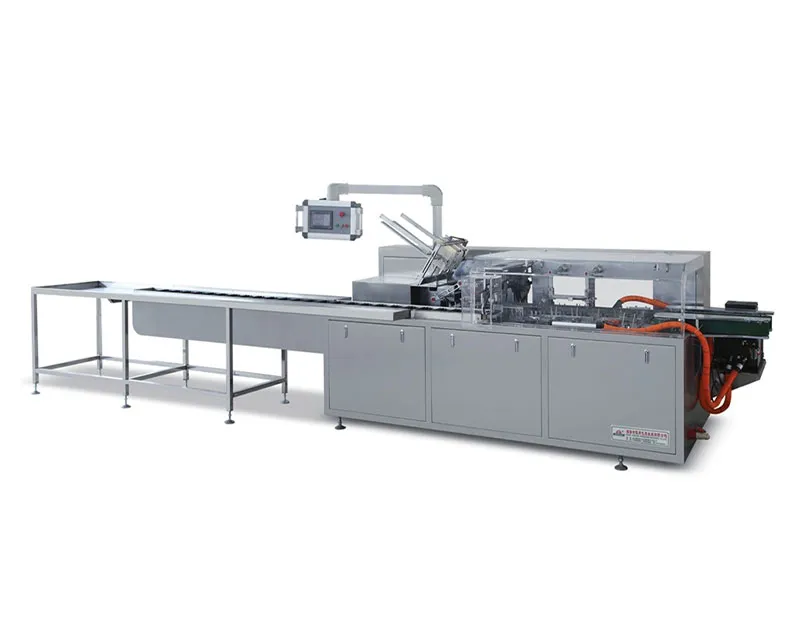
A supplier who recommends vertical without asking about these conditions is not helping the buyer make a sound decision. The correct orientation should follow from product geometry and line conditions, not from a preference for one machine type. A related guide on horizontal vs vertical cartoning can help frame the comparison.
Vertical cartoning is generally suitable for products that can be presented above an open carton and released without needing precise lateral guidance. Loose or granular products, small bottles, vials, and counted multi-component kits are common candidates. Products that must stay flat or oriented along the carton end are usually better with horizontal side-loading.
No. Rated speed is a capacity reference under defined conditions. Stable output in production depends on actual upstream arrival rate, carton quality, changeover time, minor stops, and operator attention. Buyers should ask for a defined-duration run with real materials.
FAT should demonstrate product release without tipping or bridging, carton opening and closure with the actual carton, stable output over a defined run, at least one changeover, and complete documentation including spare parts and parameter records.
Carton opening problems are often related to board stiffness, scoring quality, dimensional tolerance, or the machine’s opening system. The carton may also open partially if the vacuum or mechanical opening force is not matched to the board. Testing at the tolerance edges of the carton specification helps identify this before production.
Horizontal side-loading is often a better fit when the product must remain flat or oriented along the carton end, when the product cannot tolerate a drop, or when the line runs a stable format at high volume. The choice should follow product geometry and line conditions.
It can, but changeover time and adjustment steps matter. Buyers should ask for a demonstrated changeover during FAT and confirm the number of format parts and adjustment points. Frequent changeover without quick-change design may reduce effective output.
Selecting a vertical cartoning machine is a working-condition decision, not a category decision. The product must be presentable above the carton, the carton must open and stay open, the infeed must match the cartoner cycle, and the rated speed must translate into stable output across real shifts and SKUs. A FAT with actual materials is the most reliable way to confirm these conditions before production.
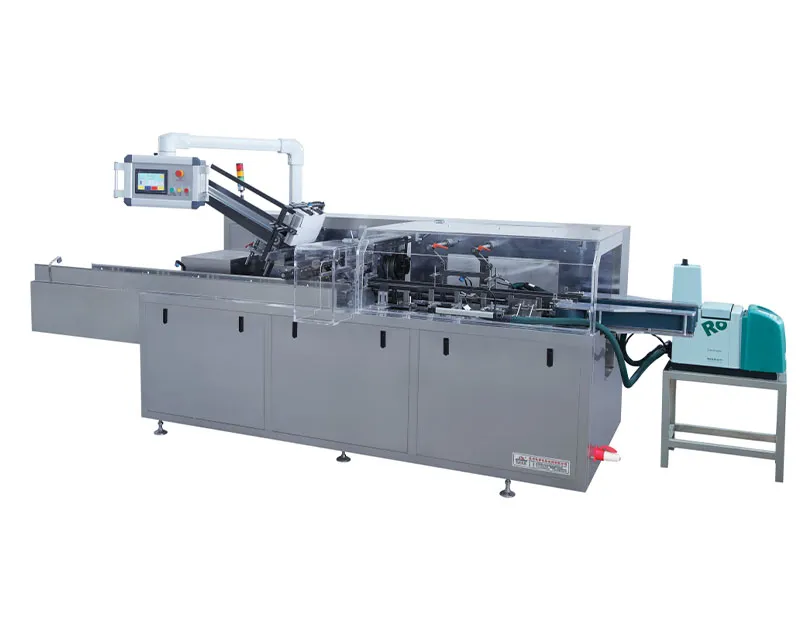
If you are evaluating a vertical cartoner for your product, start by documenting the product, carton, and line conditions listed above. You can review the available vertical cartoning machine configurations and discuss the material and production requirements with our engineering team to confirm whether vertical loading is the right fit before requesting a quote.

GET A QUOTE