

 Jul 28
Your stick pack machine runs at 150 pouches per minute. Your cartoner operates at 50 boxes per minute. The speed mismatch between these machines is significant—and without proper accumulation, every minor stoppage on the cartoner forces the upstream machine to stop, wasting production capacity and creating operator frustration.
But accumulating lightweight flexible pouches is not the same as accumulating rigid cartons or bottles. Stick packs—narrow, elongated pouches filled with powders, granules, or liquids—are lightweight, slippery, and easily deformed. They do not behave like stable products on a conveyor. Standard accumulation methods that work well for cartons can crush, misalign, or jam when handling flexible pouches.
This guide explains the unique challenges of accumulating lightweight flexible pouches, compares the major accumulation conveyor types available, and provides a selection framework to help you match the right buffering solution to your stick pack line configuration.
Stick packs and other lightweight flexible pouches differ from rigid products in several critical ways that affect accumulation conveyor design.
| Challenge | Why It Matters |
|---|---|
| Low weight | Pouches are easily displaced by air currents, conveyor vibration, or contact with other pouches |
| Slippery surfaces | Many pouch materials (laminates, films) have low friction coefficients, causing pouches to slide rather than advance predictably |
| Flexible shape | Pouches can bend, bunch, or deform under pressure, leading to jams or misalignment |
| No self-supporting structure | Unlike bottles or cartons, pouches cannot support weight from above—stacking pressure can crush or damage them |
| Orientation sensitivity | Printed graphics and seal orientations must be maintained for downstream cartoning |
As one packaging automation expert notes: “Pouches are lightweight and nearly impossible to accumulate. They require the entire system to run in unison for optimal efficiency and uptime.” This means that accumulation systems for flexible pouches must be designed with extreme care—and that standard “off-the-shelf” accumulation conveyors often fail in these applications.
When accumulation is not properly matched to flexible pouches, the results include:
Pouch crushing: Pressure from upstream pouches deforms or damages product
Misalignment: Pouches shift position, causing downstream cartoner jams
Slippage: Pouches fail to advance, creating gaps that reduce line efficiency
Jams: Pouches catch on conveyor edges or transfer points
Increased rejects: Damaged or misaligned pouches are rejected at the cartoner
For a stick pack line producing coffee, tea, or supplement sachets, these issues translate directly into lost production, higher material waste, and increased operator intervention.
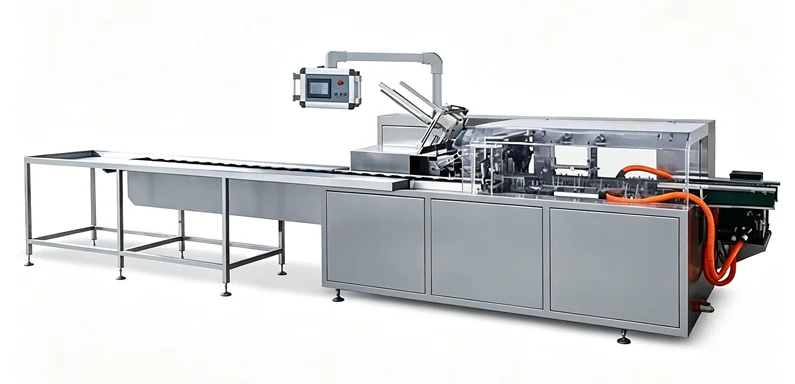
To understand the upstream equipment that feeds these accumulation systems, you can review the cartoning platform designed specifically for stick pack applications. View our Stick Pack Cartoning Machine overview
Several accumulation conveyor technologies are available for packaging lines. Each has different characteristics that affect its suitability for lightweight flexible pouches.
Zero-pressure accumulation (ZPA) systems provide the highest level of product protection by eliminating all contact between products. Each zone independently controls product movement based on downstream availability.
How it works: Sensors detect when a zone is occupied. Products only advance when the downstream zone is clear, preventing any pressure buildup between items.
Best for: Lightweight, fragile, or easily damaged products—including flexible pouches
| Advantage | Disadvantage |
|---|---|
| No product-to-product contact prevents crushing | Lower throughput than pressure systems |
| Gentle handling maintains pouch integrity | Higher initial cost and complexity |
| Accommodates varied product sizes | Requires more floor space per unit of capacity |
For flexible pouches: Zero-pressure accumulation is generally the preferred choice. It prevents the pressure buildup that would crush or deform pouches. However, the low weight and slippery surfaces of pouches mean that even zero-pressure systems must be carefully designed—with appropriate belt materials, zone lengths, and sensor placement.
Medium-pressure systems allow products to contact each other, with controlled backpressure building up along the conveyor.
How it works: Products advance continuously, but the conveyor allows some backpressure to build as products accumulate. The pressure is controlled and limited to prevent damage.
Best for: Rigid or sturdy products that can withstand contact
| Advantage | Disadvantage |
|---|---|
| Higher throughput than zero-pressure | Product-to-product contact can cause damage |
| Lower cost and simpler design | Not suitable for fragile or flexible items |
| Less floor space per unit of capacity | Pressure can deform flexible pouches |
For flexible pouches: Medium-pressure accumulation is generally not recommended for stick packs or other lightweight flexible pouches. The backpressure can crush pouches, cause misalignment, or create jams.
Alpine conveyors stack the accumulation path vertically, with the belt spiraling up a central column and then spiraling back down.
How it works: Products travel up a spiral conveyor, accumulating along the inclined path. The vertical design provides significant buffer capacity in a compact footprint.
Best for: Facilities with limited floor space, high-volume lines
| Advantage | Disadvantage |
|---|---|
| Space-saving vertical design | More complex than in-line conveyors |
| Significant buffer capacity | Higher initial cost |
| Can handle flexible packaging | May require careful product handling design |
For flexible pouches: Alpine conveyors are “ideally suited for flexible packaging, bottles, or small cartons”. The vertical spiral design can provide 2-4 minutes of buffer time in a compact footprint, making them an excellent choice for space-constrained facilities. However, the incline angles and transfer points must be carefully designed to prevent pouch slippage.
Dynamic accumulators use a single flexible conveyor belt that runs through a conveyor frame, absorbing and releasing items between processes without interruption.
How it works: The belt dynamically adjusts its path to create accumulation without stopping product flow.
Best for: Applications requiring continuous flow with variable upstream/downstream speeds
| Advantage | Disadvantage |
|---|---|
| Continuous operation without start/stop | More complex control systems |
| Gentle product handling | Higher cost |
| Flexible capacity | Less common than other types |
| Conveyor Type | Product Protection | Throughput | Floor Space | Cost | Suitability for Pouches |
|---|---|---|---|---|---|
| Zero-pressure | Highest | Moderate | Moderate | High | Excellent |
| Medium-pressure | Low | Highest | Moderate | Low | Poor |
| Alpine | Moderate-High | Moderate | Lowest | High | Good |
| Dynamic | High | Moderate-High | Moderate | High | Good |
External source: According to a 2022 accumulation conveyor guide, zero-pressure and zero-contact accumulation systems provide the best product control and lowest risk of product damage, with zero-contact systems offering the best carton control and lowest risk of product damage by instantly stopping accumulation zones to prevent items from coasting. For flexible pouches, zero-pressure systems are generally preferred over medium-pressure alternatives.
Key Selection Criteria for Flexible Pouch Accumulation
When selecting an accumulation conveyor for stick packs or other lightweight flexible pouches, evaluate these five criteria.
The most critical criterion. Any accumulation system that allows product-to-product contact or pressure buildup risks damaging flexible pouches.
What to verify:
Does the conveyor prevent contact between pouches?
Are there any transfer points where pouches could catch or misalign?
What is the maximum allowable backpressure?
For flexible pouches: Zero-pressure or zero-contact systems are strongly preferred. As one industry resource notes, zero-pressure systems “prevent bag crushing and product damage” with “smooth transitions to prevent catching and tearing”.
The belt material must provide enough friction to move lightweight pouches without causing slippage—but not so much friction that pouches stick or deform.
What to verify:
What belt material is used? (For slippery pouch surfaces, specialized belt materials may be required)
Are there guides or side rails to maintain pouch orientation?
How does the conveyor handle pouches of different sizes?
For flexible pouches: The smooth, often slippery surface of many pouch materials can lead to pouches sliding on conveyors, making precise placement difficult. Belt selection is critical—low-friction pouches require belts with adequate grip.
Calculate the required buffer capacity based on downstream machine downtime.
Formula: Buffer capacity = Upstream speed (pouches/min) × Target buffer time (minutes)
Example: 150 pouches/min × 2 minutes = 300 pouches
What to verify:
What is the maximum buffer capacity of the conveyor?
Can the capacity be expanded if production increases?
Different accumulation types have different space requirements.
| Conveyor Type | Space Requirement |
|---|---|
| In-line zero-pressure | Moderate (length increases with capacity) |
| Alpine | Low (vertical design stacks capacity) |
| Accumulation table | Moderate-high |
What to verify:
What are the conveyor dimensions?
Does the layout allow for future expansion?
The accumulation conveyor must interface seamlessly with both the stick pack machine and the cartoner.
What to verify:
What are the infeed height and outfeed height?
Does the conveyor support the required speed range?
Can the conveyor be integrated with the line control system?
External source: According to Nercon Conveyors, “Knowing the location of the bottlenecks in the packaging line will help determine where the buffer locations are needed and the accumulation capacity required”. The accumulation capacity required, available floor space or ceiling heights, type of package, and line speeds will help to determine the types of accumulation equipment best suited for the application.
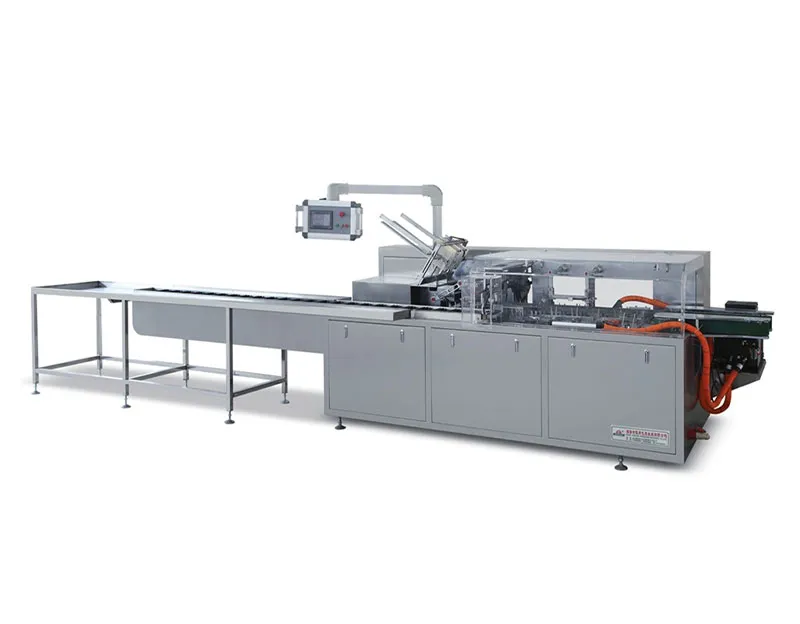
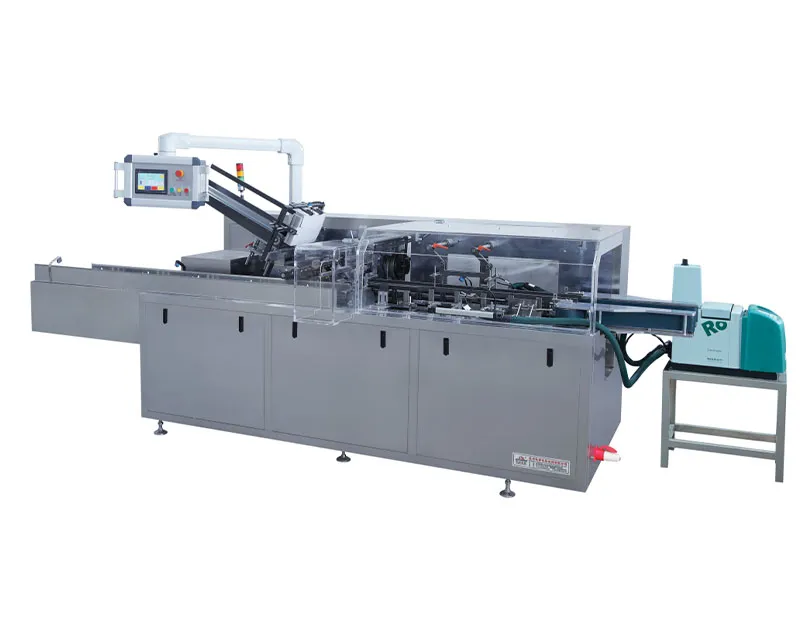
For customized secondary packaging projects that load stick packs into cartons, browse our tailored automatic stick pack cartoning machines widely applied across diverse food and beverage packaging lines.

Profile:
Stick pack machine: 180 pouches/min
Cartoner (KXZ-130B): 40 boxes/min × 6 pouches/box = 240 pouches/min consumption
Downstream downtime (jam clearance): 2-3 minutes
Available floor space: Moderate
Recommended solution: Zero-pressure in-line accumulation conveyor with 2-3 minutes of buffer capacity (360-540 pouches)
Rationale: The cartoner consumes pouches faster than the stick pack machine produces them—the line is primary-constrained, and the stick pack machine is the bottleneck. A zero-pressure in-line accumulator provides the gentle handling required for lightweight coffee sticks while offering sufficient buffer capacity for typical downstream stoppages.
Key specification: Conveyor belt material with adequate grip for coffee stick packaging film.
Profile:
Stick pack machine: 120 pouches/min
Cartoner: 30 boxes/min × 5 pouches/box = 150 pouches/min consumption
Limited floor space
Multiple SKUs with frequent changeovers
Recommended solution: Alpine (spiral) accumulation conveyor
Rationale: The space-saving vertical design provides the required buffer capacity in a compact footprint. Alpine conveyors can buffer 2-4 minutes of production, making them ideal for space-constrained facilities.
Key specification: Confirm that the Alpine conveyor's incline angles and transfer points are designed for flexible pouch handling to prevent slippage.
You now have a framework based on product characteristics, buffer requirements, floor space, and integration needs. The next step is documenting your specific requirements before approaching equipment suppliers.
Prepare a specification document that includes:
Pouch dimensions and weight (length, width, thickness, weight per pouch)
Pouch material (film type, surface characteristics)
Upstream machine speed (sustained pouches per minute)
Downstream machine consumption (pouches per minute required)
Target buffer time (minutes of production to accumulate)
Available floor space (dimensions, ceiling height)
Integration requirements (infeed/outfeed heights, control system compatibility)
With this document, suppliers can provide targeted recommendations. You can compare how different accumulation technologies—zero-pressure, alpine, dynamic—address your specific pouch handling requirements.
If this accumulation conveyor selection guide was useful, the following articles will help you complete your stick pack line planning:
Zero-Pressure vs Zero-Contact Accumulation: Which Offers Better Protection for Flexible Pouches?
Belt Material Selection for Slippery Pouch Surfaces
Buffer Capacity Calculation Worksheet for Stick Pack Lines
Integrating Accumulation Conveyors with Cartoner Controls
Alpine Conveyor Design Considerations for Flexible Packaging
GET A QUOTE