

 Aug 31
Your upstream filling line runs at 200 units per minute. Your labeling machine keeps pace without breaking a sweat. But when products reach the cartoning station, the line slows to a crawl—80 cartons per minute, maybe less. Operators scramble to clear jams. Cartons pile up on accumulation tables. And somewhere in the back of your mind, you know: the cartoner is the bottleneck.
This is one of the most common—and costly—problems in packaging operations. A cartoning machine that cannot keep up with upstream equipment doesn't just cap your output; it wastes the capacity of every other machine on the line. This guide helps you diagnose whether slow cartoning speed is truly a capacity problem, compare standard and high-speed cartoning machine capabilities, and decide when an upgrade makes business sense.
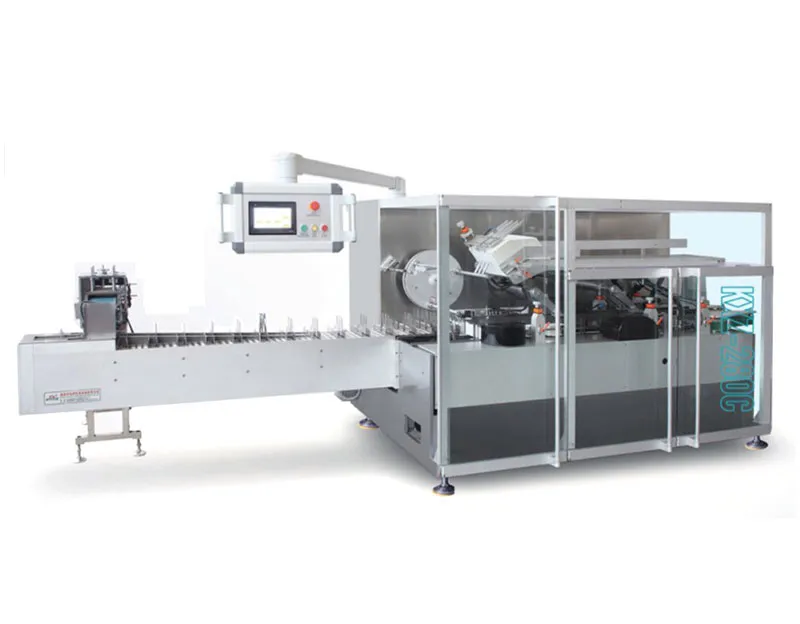
Not every slow-feeling line needs a new machine. Before considering an upgrade, you need to confirm that the cartoner—not upstream feeding, downstream handling, or operator availability—is the limiting factor.
A machine rated for 150 cartons per minute that stops twice an hour may deliver less usable output than a 100-carton system that runs all day. Track OEE (Overall Equipment Effectiveness) over a full shift. If your cartoner consistently runs below 80% of its rated speed due to jams, misfeeds, or changeovers, speed isn't the root cause—reliability is.
A simple rule of thumb: your cartoner speed should be at least 1.2× your upstream maximum speed to maintain a buffer margin and absorb feed irregularities. If your filler outputs 150 units per minute and your cartoner runs at 120 CPM, the cartoner is mathematically incapable of keeping up—even before accounting for stoppages.
Walk the line. Are products backing up before the cartoner? Is the cartoner frequently waiting for product? Both are signs of a mismatch. A turnkey line's throughput is governed by its slowest element—and that element is often the cartoner.
If you run multiple SKUs, changeover time can be as detrimental to effective throughput as slow speed. A machine that takes 40 minutes to switch formats may produce less over a week than a slightly slower machine that changes over in 15 minutes.To learn more about how motion type affects both speed and changeover flexibility, read our guide on continuous-motion vs intermittent-motion cartoners.
Once you've confirmed that speed is the issue, the next question is: how much speed do you actually need? The gap between standard and high-speed cartoners is not just about output numbers—it affects machine architecture, motion type, product handling, and total cost of ownership.
| Dimension | Standard Cartoning Machine | High-Speed Cartoning Machine |
|---|---|---|
| Typical speed range | 30–120 cartons per minute | 80–300+ cartons per minute |
| Motion type | Often intermittent (start-stop) | Usually continuous (non-stop) |
| Product handling | Precise—product inserted into stationary carton | Requires synchronized "flying" insertion |
| Changeover time | 15–40 minutes typical | 20–60 minutes typical |
| Initial capital cost | Lower—simpler mechanical design | Higher—more servos and precision components |
| Best suited for | Sub-100 CPM applications; delicate or unstable products | High-volume, continuous production; standardized products |
What these differences mean for your operation:
Speed range: A high-speed machine can deliver 2× to 10× the output of a standard machine. But that increase only matters if your upstream and downstream equipment can support it.
Motion type: Continuous-motion machines never stop during production, which enables higher sustained speeds but requires more precise synchronization. Intermittent machines stop at each station, allowing gentler product handling but limiting maximum speed.
Product handling: If your products are fragile, heavy, or unstable, an intermittent machine may be the safer choice despite lower speed. High-speed continuous machines require the product to be inserted while the carton is moving—any misalignment can cause damage or jams.
Total cost: A high-speed machine costs more upfront but may deliver lower per-unit packaging cost at high volumes. The trade-off is that if you don't need the extra speed, you're paying for capability you can't use.For a deeper dive into horizontal cartoning machine capabilities and applications, see our horizontal cartoning machine overview.
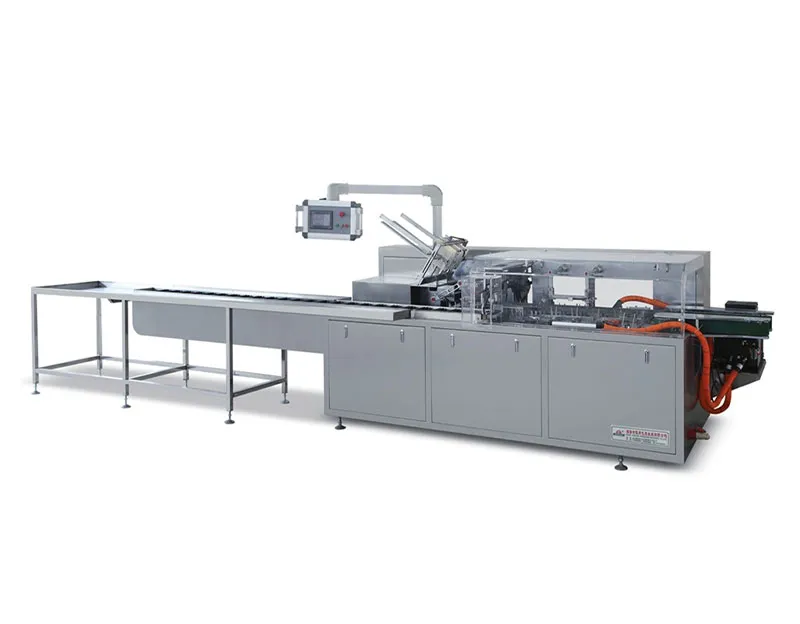
Upgrading to a high-speed cartoning machine is a significant capital decision. Before you commit, work through these five questions:
Calculate your actual production target in cartons per shift, then divide by available run time. This gives you the minimum sustained speed you need. A machine rated for 200 CPM that can only sustain 150 CPM due to product characteristics won't meet a 180 CPM requirement.
A high-speed cartoner is useless if the filler can't supply enough product or the case packer can't handle the output. For example, a high-speed cartoner like the KXZ-280C can produce 100–200 cartons per minute, while a master carton packer may handle only 16–20 cases per minute. You may need accumulation buffers or a faster case packer to match.
Fragile, heavy, or irregularly shaped products may not tolerate the high-speed insertion forces of a continuous-motion machine. If your product requires gentle handling, a slower intermittent machine that stops during insertion may actually deliver higher usable output with less waste.
High-speed machines often have longer changeover times due to more complex synchronization. If you run many small batches, the time lost to changeovers may erase the speed gains. In that case, a standard machine with faster changeovers could be more productive overall.
Factor in installation, training, maintenance, spare parts, and energy consumption. A high-speed machine with more servos and precision components may have higher maintenance costs over its lifecycle. Compare the per-carton packaging cost at your expected volume, not the machine price tag.
A pharmaceutical manufacturer runs blister packs at 200 blisters per minute. Their existing cartoner, an intermittent model, tops out at 80 CPM. Products pile up between the blister machine and the cartoner; operators manually transfer and load to keep up. Upgrading to a continuous-motion high-speed cartoner rated for 150–200 CPM would eliminate the bottleneck, reduce labor, and allow the line to run at full capacity. The math works because upstream output already justifies the speed.
A specialty food company produces 15 different products in small batches. They change carton sizes 3–4 times per shift. Their current cartoner runs at 60 CPM but changes over in 15 minutes. A high-speed machine rated for 150 CPM would take 45 minutes to change over. Over a typical shift, the time lost to longer changeovers would erase any speed advantage—and the higher purchase price would never pay back.
A mid-size consumer goods company expects 30% annual volume growth over the next three years. Their current cartoner runs at 100 CPM and is already near capacity during peak seasons. Upgrading now to a 200 CPM high-speed machine would provide headroom for growth, reduce overtime costs, and delay the next upgrade cycle. The decision is strategic rather than reactive.For industry-specific packaging challenges and cartoning considerations, explore our pharmaceutical application page or food & beverage application page.
Once you have clarified these key decision factors—your actual sustained throughput requirement, upstream and downstream capacities, product characteristics, changeover frequency, and total cost of ownership—comparing the specific specifications of available cartoning machines becomes the next logical step.
Key questions to ask when evaluating potential upgrades:
What is the machine's sustained speed at your product specifications (not just peak rating)?
Does the motion type (continuous vs. intermittent) match your product handling needs?
How long does a typical changeover take, and what tools or adjustments are required?
What accumulation or buffering is needed to match upstream and downstream equipment?
What is the expected maintenance schedule and spare parts availability?
You can review KAIXIANG's high-speed cartoning machine series for high-volume pharmaceutical and food applications, or explore standard-speed configurations optimized for flexibility and gentle product handling. Each series is designed with specific speed and handling requirements in mind, backed by 15+ years of R&D experience and ISO9001 & CE certification.
Continuous-Motion vs Intermittent-Motion Cartoners: Speed, Stability, and Maintenance Trade-offs
Horizontal Cartoning Machine: Definition, Benefits & Industry Applications
How to Calculate Your True Throughput Requirement for Cartoning Lines
Integrating Master Carton Packers with Cartoners: Speed Matching and Accumulation Strategies
Sep 14,2026 
GET A QUOTE