

 Sep 14
Every cartoning machine brochure promises “stable, efficient, high-quality” performance. But when you put a machine on your factory floor, what actually determines whether it becomes a productive asset or a maintenance headache? The answer rarely lies in the headline speed figure. According to industry analysis, the global cartoning machinery market was valued at approximately USD 5 billion in 2024 and is projected to grow to USD 8.2 billion by 2034, driven by rising demand for automation and increasingly strict traceability regulations. That growth means more options—and more complexity in the selection process.
This guide distills the decision down to five factors that actually matter: capacity matching, motion type, changeover efficiency, total cost of ownership, and regulatory compliance. Each factor is explained in terms of its real-world impact on your production line—not just its specification-sheet value. For an overview of the different cartoning platforms available across these five decision dimensions, explore our cartoning machine series.
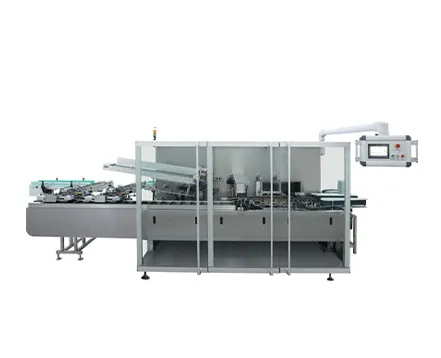
The most common—and most expensive—mistake in cartoning machine selection is buying a machine that is too fast for the rest of the line. A cartoner rated for 200 cartons per minute delivers zero additional value if your upstream filling machine can only supply product at 100 units per minute.
What to measure before comparing machines:
Actual sustained throughput over a full shift, not peak rated speed. A machine rated for 200 cartons per minute that stops twice an hour may deliver less usable output than a 150-carton system that runs continuously.
Upstream maximum output. Your cartoner should be capable of at least 1.2× your upstream maximum speed to absorb feed irregularities and maintain a buffer margin.
Downstream capacity. If your case packer or master carton packing machine can only handle 16–20 cases per minute, a 200-carton-per-minute cartoner may simply shift the bottleneck downstream.
Practical benchmark:
| Production Scale | Recommended Cartoner Speed | Typical Application |
|---|---|---|
| Small batch / multi-SKU | 30–60 cartons/min | Contract packing, specialty products |
| Medium volume | 60–120 cartons/min | Food, daily use, standard pharma |
| High volume | 120–300+ cartons/min | Large-scale pharma, beverage, FMCG |
The US Bureau of Labor Statistics projects an annual increase of approximately 3.2% in packaging industry employment through 2026, reflecting growing reliance on efficient automation technologies. But that efficiency only materializes when equipment capacity is matched to actual production demand.
The motion type of a cartoning machine—whether it stops at each station (intermittent) or runs without interruption (continuous)—is the single biggest determinant of both maximum speed and product handling capability.
| Dimension | Intermittent Motion | Continuous Motion |
|---|---|---|
| Typical speed range | 30–150 cartons/min | 300–600+ cartons/min |
| Product handling | Gentle—product inserted into stationary carton | Requires synchronized “flying” insertion |
| Changeover speed | Faster—simpler mechanics | Slower—more complex synchronization |
| Maintenance complexity | Lower | Higher—more servos and precision components |
| Best suited for | Multi-SKU production, fragile or unstable products | High-volume, standardized products |
How to decide: If your products are fragile, irregularly shaped, or if you run multiple SKUs with frequent changeovers, an intermittent machine may deliver higher usable output despite a lower rated speed. If you produce a narrow range of products at very high volumes with stable upstream feeding, continuous motion becomes the better choice.
Horizontal cartoning machines—which load products from the side—dominate the market, accounting for approximately USD 3 billion in 2024 revenue and growing at a CAGR of around 5.2%, according to Global Market Insights. This preference reflects their adaptability across product shapes and their compatibility with both manual and automated loading systems.For a detailed comparison of how intermittent and continuous motion affect both speed and changeover flexibility, read our guide on continuous-motion vs intermittent-motion cartoners.
If you produce more than one carton size or product format, changeover time will affect your effective capacity more than top speed ever will. A machine that runs at 200 cartons per minute but takes 60 minutes to switch formats may produce less over a week than a 120-carton machine that changes over in 15 minutes.
What drives changeover time:
Tool-free vs. tool-required adjustments. Machines requiring wrenches and manual re-alignment take significantly longer than those with quick-release mechanisms and color-coded guides.
Recipe storage capability. Modern servo-driven machines can store format recipes and automatically reposition axes when switching products. Target changeover time for standard size changes: under 15 minutes.
Number of SKUs. If you run 10 different SKUs per week with average changeover times of 60 minutes, you are losing approximately 10 hours per week—potentially 25% of available production time—to changeovers alone.
Practical tip: Ask the vendor for the actual changeover time at your specific format range, not their best-case demonstration figure. Request a live changeover demonstration during Factory Acceptance Testing.
The purchase price of a cartoning machine represents only a fraction of its true cost. A 2025 PMMI report indicates that end-of-line automation investments, including case packing, can deliver ROI within 12 to 24 months—but only when the full lifecycle cost is properly evaluated.
Key TCO components to evaluate:
| Cost Component | What to Assess |
|---|---|
| Installation & integration | Line integration complexity, utility requirements, floor space |
| Training | Operator and maintenance technician training programs |
| Consumables | Glue, tape, compressed air consumption (e.g., 20m³/h for some models) |
| Maintenance & spare parts | Wearing parts replacement frequency, local parts availability |
| Downtime losses | Expected MTBF (Mean Time Between Failures), MTTR (Mean Time To Repair) |
| Changeover labor | Operator time per format change × changeover frequency |
A machine that costs 30% more upfront but reduces changeover time by 45 minutes per switch and has locally available spare parts may deliver a lower cost per carton over three years.
Regulatory requirements vary significantly by industry and destination market. In pharmaceutical packaging, compliance is non-negotiable—and the bar continues to rise.
Key regulatory frameworks to consider:
EU Machinery Directive 2006/42/EC: Packaging machinery exported to the EU must comply with this directive. The specific harmonized standard for packaging machines is EN 415 series, which covers safety requirements for different machine types including cartoning equipment.
EU GMP Annex 1: The revised Annex 1, fully applicable since August 2023, represents the most significant update to sterile product manufacturing guidance in decades. For the first time, it explicitly places primary packaging materials within its scope, requiring manufacturers to demonstrate that packaging components are produced and handled under validated processes. This directly affects cartoning equipment used in sterile pharmaceutical applications, which must minimize manual intervention in the production process.
21 CFR Part 211 (FDA): For the US pharmaceutical market, this regulation governs current Good Manufacturing Practice for finished pharmaceuticals, including packaging operations. Cartoning equipment must support electronic record-keeping, validation protocols (IQ/OQ/PQ), and audit trail capabilities.
ICH Q9: Quality Risk Management principles should be applied to equipment selection, particularly for products with high patient-safety risk profiles.
Practical implication: If you export to the EU, verify that the machine carries CE marking and complies with EN 415. If you produce pharmaceuticals for regulated markets, confirm that the cartoner supports serialization, tamper-evident features, and data integrity requirements.For industry-specific compliance and packaging challenges, explore our pharmaceutical application page and food & beverage application page.
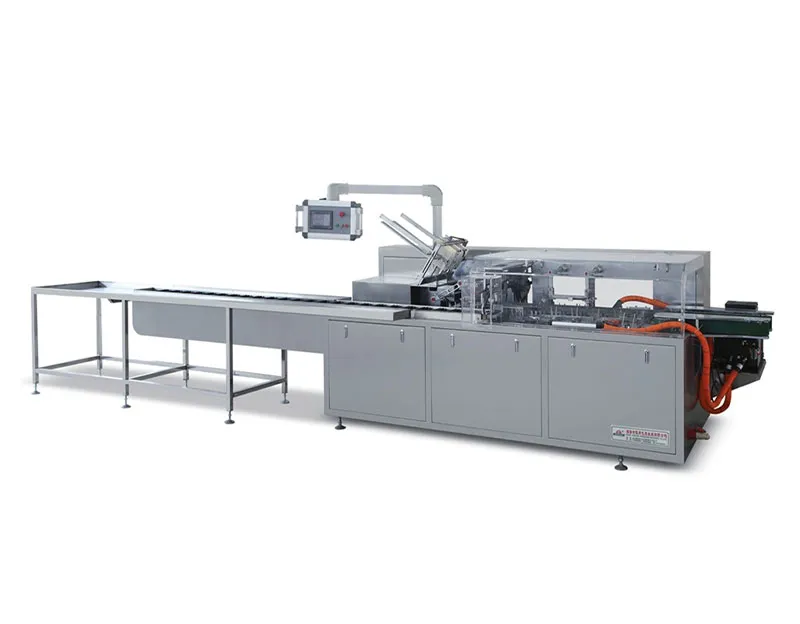
| If your priority is… | Focus on… | Typical configuration |
|---|---|---|
| Maximum throughput for one product | Continuous motion, high rated speed | 200–300+ cartons/min, minimal changeover needs |
| Flexibility across many SKUs | Changeover speed, recipe storage | Intermittent motion, tool-free adjustment, <15 min changeover |
| Regulatory compliance | GMP features, documentation, validation support | IQ/OQ/PQ documentation, audit trails, CE/EN 415 |
| Lowest cost per carton at scale | TCO analysis, spare parts availability | Evaluate 3-year cost, not purchase price |
| Gentle product handling | Intermittent motion, product-specific infeed | 30–120 cartons/min, custom tooling |
Once you have clarified these five decision factors—capacity requirement, motion type, changeover frequency, TCO priorities, and regulatory requirements—comparing specific machine configurations becomes the next logical step.
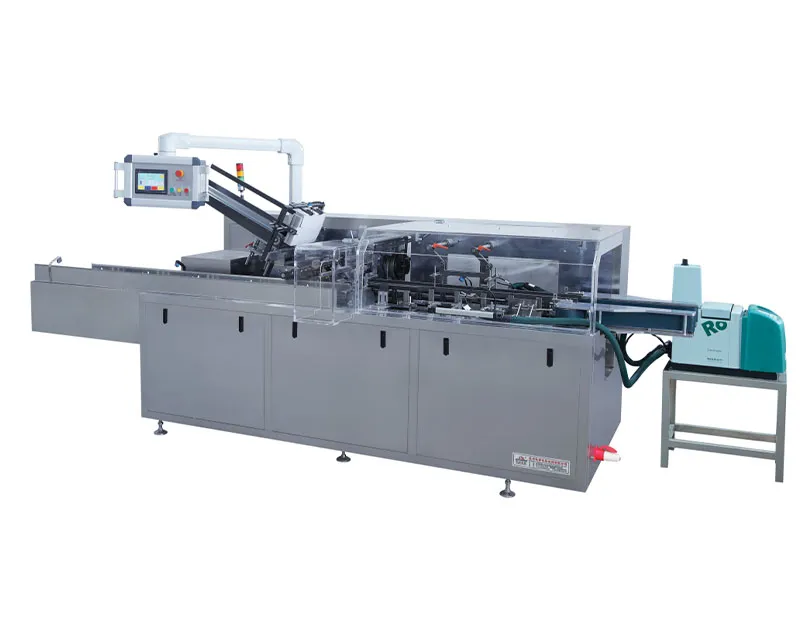
KAIXIANG’s product range spans horizontal, high-speed, and vertical cartoning machines, as well as master carton packing machines, covering production scales from 30 to 200+ cartons per minute. Each platform is designed with specific speed, flexibility, and compliance requirements in mind, backed by 15+ years of R&D experience, ISO9001 and CE certification, and global sales to 60+ countries.
Sep 14,2026
Aug 31,2026
Aug 26,2026 
GET A QUOTE