

 Jul 07
Your packaging line runs efficiently upstream—filling, sealing, and labeling products at high speed. But when it comes to cartoning, the bottleneck appears. The wrong machine type—horizontal or vertical, standard or high-speed—can cap your entire production output, no matter how fast your upstream equipment performs.
The global cartoning machines market reflects the scale of this challenge. Valued at approximately USD 5.3 to 7.0 billion in 2025, the market is projected to grow at a compound annual growth rate (CAGR) of 3.6% to 8.0% through 2032. End-load (horizontal) cartoning machines alone are projected to dominate the market with a share of around 38% in 2025. This growth is driven by increasing demand for efficient packaging solutions across food and beverage, pharmaceuticals, and cosmetics—and by the need for manufacturers to choose the right cartoning technology for their specific products.
This guide compares horizontal and vertical cartoning machines, explains the speed capabilities of standard versus high-speed models, and provides a decision framework to help you match equipment type to your product characteristics, volume requirements, and industry standards.
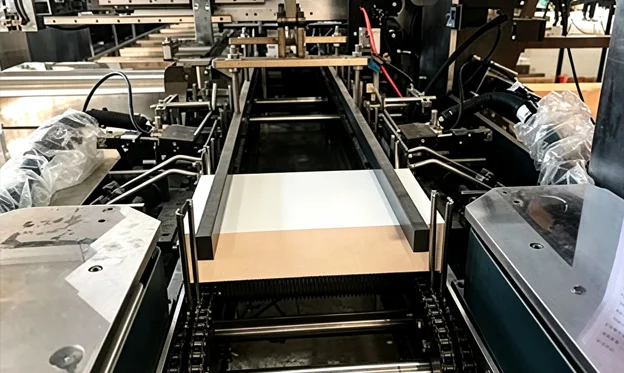
The fundamental distinction between horizontal and vertical cartoning machines lies in how the product enters the carton, and this difference determines which machine type suits your product.
In a horizontal cartoning machine, the product slides smoothly into the carton from the side. The carton is typically oriented with its opening facing horizontally, and the product is pushed into the carton along a horizontal plane. This design is the most common cartoning configuration globally, accounting for approximately 38% of the market.
How it works:
Cartons are erected and held open horizontally
Products are conveyed to the loading station
A pusher mechanism slides the product into the carton from the side
Carton flaps are folded and sealed (tuck or glue)
Typical applications: Horizontal cartoners are widely used in food, medicine, health care products, and other industries—particularly for products that are stable and can be pushed without damage.
| Application | Example Products |
|---|---|
| Food | Stick packs, bulk foods (grains, nuts), tray-packed foods, pouch foods, candies, dried fruits, instant noodles |
| Pharmaceutical | Blister packs, bottles, tubes |
| Daily chemical | Tubes, sachets, small containers |
In a vertical cartoning machine, products are loaded from the top into upright cartons. The equipment typically integrates weighing, carton forming, product filling, and sealing functions. This design is particularly suitable for long and upright products that cannot be easily pushed horizontally.
How it works:
Cartons are erected and held open vertically
Products are dropped or placed into the carton from above
The filled carton is sealed and discharged
Typical applications: Vertical cartoners are ideal for products that are tall, narrow, or require precise weight control during filling.
| Application | Example Products |
|---|---|
| Food | Nuts (with multihead weighers), artisanal chocolates, confectionery |
| Pharmaceutical | Blister boards, ampoules, vials, glass, and plastic containers |
| Specialty | Small-batch, high-precision products |
| Dimension | Horizontal Cartoning | Vertical Cartoning |
|---|---|---|
| Loading direction | Side (horizontal push) | Top (vertical drop/placement) |
| Best for | Stable products that can be pushed; high-volume lines | Long, upright products; products requiring precise weight control |
| Typical speed range | 20-100+ boxes/min (standard); up to 200 boxes/min (high-speed) | 20-50 boxes/min |
| Integrated functions | Carton erecting, product loading, and sealing | Weighing, carton forming, filling, sealing |
| Common industries | Food, pharma, daily chemical, healthcare | Food (nuts, confectionery), pharma, specialty products |
To explore the full range of cartoning platforms available for different product types and speed requirements, you can review the automated cartoning equipment series designed for primary packaging. View our Horizontal Cartoning Machine Product Series.
Speed is one of the most critical factors in cartoning machine selection—and it varies significantly across machine types and models.
Most horizontal and vertical cartoning machines operate in the 20-100 boxes per minute range. This speed range is sufficient for:
Small to medium-volume production lines
Operations with frequent changeovers
Products that require careful handling
Facilities with moderate throughput requirements
High-speed cartoning machines are designed for production lines that pursue extreme speed and output. With advanced automation technology, cartoning quantities can reach 200 boxes per minute—a 2× to 10× increase over standard machines.
What makes high-speed possible:
Advanced automation and control systems
Servo-driven motion systems for precise synchronization
Continuous-motion operation (vs. intermittent)
Robust construction for sustained high-speed operation
Key trade-offs to consider:
Higher initial investment: High-speed machines cost significantly more than standard models
Greater maintenance requirements: More complex systems require specialized maintenance
Less flexibility: High-speed machines are often optimized for dedicated, high-volume production
Integration demands: Upstream and downstream equipment must match the cartoner’s speed
| Machine Type | Model | Speed Range | Typical Application |
|---|---|---|---|
| Horizontal (standard) | KXZ-130B | 30-100 boxes/min | Stick packs, bulk food, trays |
| Horizontal (standard) | KXZ-200B | 30-50 boxes/min | Pouch foods |
| Horizontal (standard) | KXZ-250B | 20-40 boxes/min | High-speed food packaging |
| Horizontal (standard) | KXZ-350B | 20-30 boxes/min | Large-size cartons |
| High-speed | KXZ-130C | 60-100 boxes/min | Food, mosquito repellent |
| High-speed | KXZ-280C | 100-200 boxes/min | Small cakes, powder, tissue, tube |
| Vertical | KXZ-160 | 30-50 cartons/min | Nuts with multihead weighers |
| Vertical | KXZ-260 | 20-50 boxes/min | Small-batch, high-precision products |
Major trends in the cartoning machine market include increasing adoption of fully automated cartoners, rising demand for high-speed packaging lines, growing integration of servo-driven motion systems, expansion of flexible carton size handling, and enhanced focus on hygienic machine design. These trends reflect the industry‘s movement toward greater automation, speed, and flexibility—key considerations for any manufacturer evaluating new cartoning equipment.
The decision between horizontal and vertical cartoning machines should be driven by your product characteristics, not by the machine’s speed or price alone.
| Question | If Yes → Consider Horizontal | If Yes → Consider Vertical |
|---|---|---|
| Is your product stable and able to be pushed without damage? | Yes—horizontal push loading is efficient and reliable | No—vertical drop may be gentler |
| Is your product tall, narrow, or upright in shape? | No—horizontal pushing may cause tipping | Yes—vertical loading maintains orientation |
| Do you need precise weight control for each carton? | Not typically integrated | Yes—vertical machines can integrate multihead weighers |
| Is your volume high (100+ boxes/min)? | Yes—horizontal machines are available at high speeds | Limited—vertical machines typically run 20-50 boxes/min |
| Do you have frequent changeovers? | Yes—horizontal machines offer flexible size handling | Consider—changeovers may take longer on integrated vertical systems |
| Is floor space limited? | Varies—horizontal machines can be longer | Yes—compact vertical designs available |
The single most important factor is whether your product can withstand horizontal pushing. Horizontal cartoners use a pusher mechanism to slide products into cartons. If your product is:
Fragile (e.g., glass vials, ampoules): Vertical loading may be gentler
Unstable (e.g., tall bottles, tubes): Horizontal pushing may cause tipping
Stable (e.g., blister packs, sachets, flowpacks): Horizontal is efficient and reliable
For industry-specific cartoning considerations, you can explore daily use packing machine guides tailored to different product sectors.
View Packaging Solutions for Food & Beverage, Pharmaceutical Product Applications, and Daily Use Product Applications.
Profile:
Stable, rectangular products (e.g., cereal bars, cookies, candies)
Output requirement: 150+ cartons per minute
Dedicated product lines with infrequent changeovers
24/5 production schedule
Recommended solution: Horizontal high-speed cartoning machine (e.g., KXZ-280C at 100-200 boxes/min)
Rationale: The stable product tolerates horizontal pushing. High-speed operation matches upstream production rates. Infrequent changeovers mean the longer setup time of high-speed machines is acceptable.
Profile:
Nuts, dried fruits, or confectionery requiring precise portion control
Output requirement: 30-50 cartons per minute
Multiple SKUs requiring frequent changeovers
Quality and consistency are paramount
Recommended solution: Vertical Cartoning Machine With Multihead Weighters (e.g., KXZ-160 at 30-50 cartons/min)
Rationale: The vertical design accommodates the upright, irregular shape of nuts. Integrated multihead weighers ensure each carton contains the correct weight. The moderate speed is sufficient for specialty production volumes.
Profile:
Blister packs or tubes requiring high-speed cartoning
Output requirement: 100-200 cartons per minute
Strict quality and traceability requirements
Integration with serialization systems
Recommended solution: High-speed horizontal cartoning machine with advanced control systems (e.g., KXZ-280C)
Rationale: Blister packs are stable and tolerate horizontal pushing. The high-speed machine matches the output of modern blister lines. Advanced controls support serialization and quality monitoring.
You now have a framework based on product characteristics, speed requirements, and application fit. The next step is documenting your specific needs before approaching equipment suppliers.
Prepare a specification document that includes:
Product dimensions and weight (minimum and maximum for all SKUs)
Product characteristics (stable/fragile, shape, orientation requirements)
Required output speed (sustained cartons per minute)
Changeover frequency (average number per day or week)
Integration requirements (upstream and downstream equipment)
Industry-specific requirements (sanitation, validation, serialization)
Available floor space
With this document, suppliers can provide targeted recommendations. You can compare how horizontal versus vertical configurations—and standard versus high-speed models—address your specific production requirements.
If this cartoning machine selection guide was useful, the following articles will help you complete your packaging line planning:
Continuous-Motion vs Intermittent-Motion Cartoners: Speed, Stability, and Maintenance Trade-offs
How to Calculate Your True Throughput Requirement for Cartoning Lines
Glue Seal vs Tape Seal: Which Case Closure Method Fits Your Supply Chain?
Integrating Master Carton Packers with Cartoners: Speed Matching and Accumulation Strategies
Cartoning Machine Maintenance Guide: Maximizing Uptime and Equipment Life
Sep 14,2026
Aug 31,2026 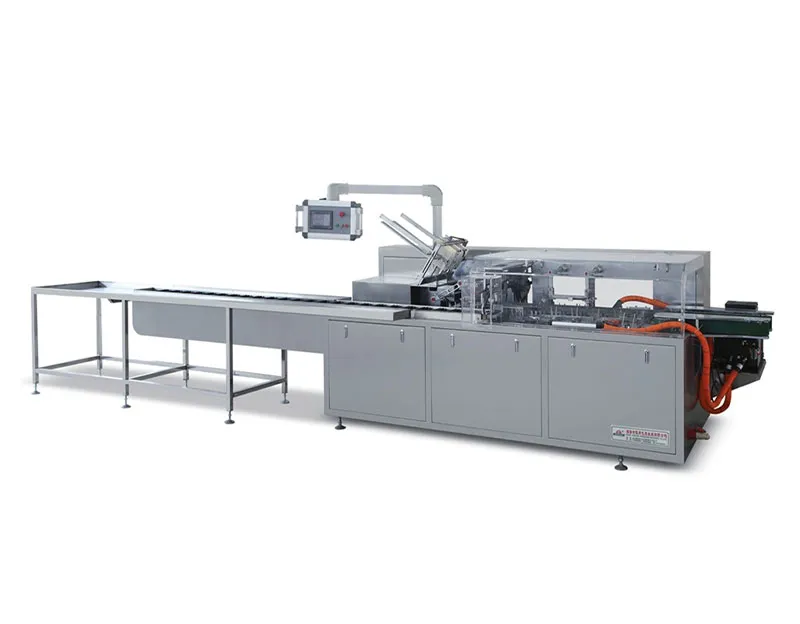
GET A QUOTE