

 Apr 30
You have a beautifully designed serum bottle with a distinctive dropper and a matching outer carton. The problem? That bottle loves to roll. And when it rolls inside the cartoning machine, the result is either a jam that stops your line or a scratched surface that turns luxury packaging into a reject pile. This is the daily frustration for many cosmetic production managers.
Unlike rigid pharmaceutical vials or square food boxes, cosmetic tubes and bottles come in a frustrating variety of shapes—oval, cylindrical, tapered, soft-squeeze. Each behaves differently on a conveyor. The real question isn't "how fast can you run?" but "how gently can you handle without sacrificing speed?"
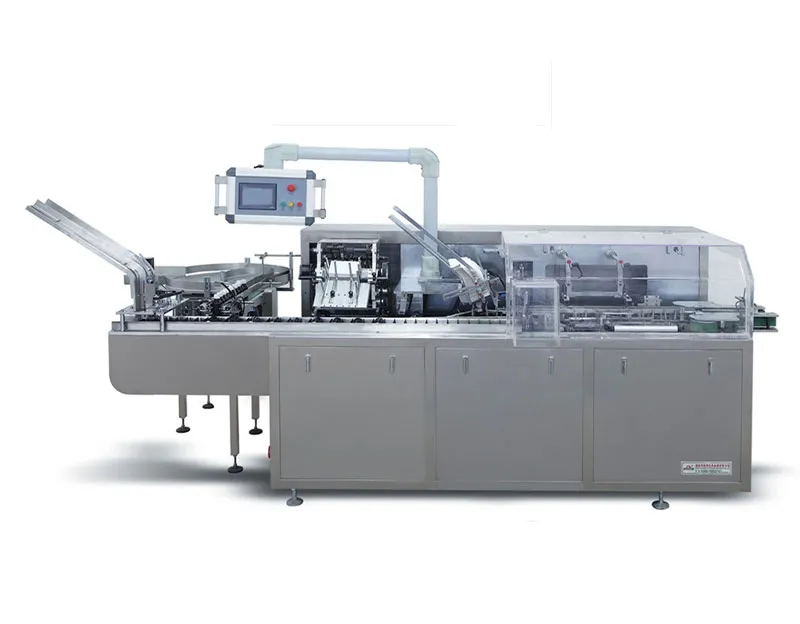
Walk into any contract packaging facility, and you will hear the same complaint: changeover nightmares. Switching from a 50ml cream jar (short and wide) to a 100ml tube (long and unstable) on generic equipment often requires mechanical adjustments that take hours. According to a 2023 survey by PMMI, changeover downtime costs mid-size cosmetic brands an average of $15,000 annually per production line.
The root cause? Most standard automatic cartoning equipment was designed for uniform, stable products like blister packs or cereal boxes. Cosmetics break those rules.
Tubes shift their center of gravity as they empty (a full tube is bottom-heavy; a nearly empty one is top-heavy during filling)
Bottles with unique caps create uneven heights that confuse standard leaflet inserters
Soft laminate tubes compress under mechanical pusher fingers, leading to misfeeds
Here is something most equipment brochures won't tell you: a squeezable tube behaves more like a water balloon than a solid object. If your tube feeding system uses a standard reciprocating pusher, you are essentially trying to push a sponge into a hole. It will buckle.
The industry solution that has gained traction among European cosmetic lines is servo-controlled starwheel infeed. Instead of pushing from behind, starwheels cradle each tube individually, transferring them sideways into the carton. This gentle side-load cartoning method maintains the tube's printed graphics—critical for premium brands—and eliminates the "buckling" that occurs with push-style loaders.
Bottles present a different physics problem. Their stability depends entirely on height-to-diameter ratio. A study published in Packaging Technology and Science noted that bottles with a ratio exceeding 3:1 are 40% more likely to tip during high-speed indexing.
So how does a smart cartoning line solve this? Through continuous motion rather than intermittent motion. Intermittent machines stop and start abruptly—that's when bottles tip. Continuous motion flows like a river, keeping products under constant, controlled forward pressure. This is particularly important for cosmetics line bottle and tube cartoning applications where the product presentation is as valuable as the formula inside.
Some production managers avoid horizontal cartoners because they believe the maintenance is complex. Having spoken with maintenance leads at three mid-sized contract packagers, a different picture emerges. The machines with the highest downtime aren't the mechanically complex ones—they are the ones with exposed drive chains and open lubrication points collecting dust and powder.
Modern systems use sealed cam boxes and decentralized servo drives. When a servo fails, you swap it in eight minutes. When a drive chain breaks, you are looking at four hours of cleaning and re-tensioning. The lesson? Ask your vendor about IP ratings for the drive compartments, especially if you handle powder foundations or loose pigments.
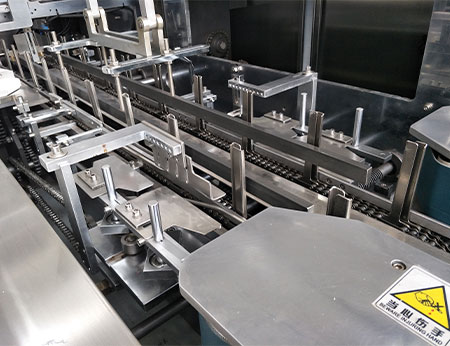
For tube cartoning, one overlooked feature is the carton opening mechanism. Standard machines use rotating suckers to pull the carton open. But if the carton board has a heavy varnish (common in luxury cosmetics), those suckers can slip or fail to open fully. The result? A tube shoved against a half-closed carton flap, creating a "wrinkle" at the bottom of the package.
High-end systems use positive mechanical opening or assisted vacuum with mechanical guide fingers. This ensures the carton "mouth" is fully square before insertion. For brands selling on Amazon or Sephora, where unboxing videos are user-generated marketing, a wrinkled carton is a silent brand killer.
Making a decision comes down to three specific questions about your product portfolio:
What is the range of tube hardness? (Measured by durometer)
Do your bottles have tamper-evident bands or induction seals? (These add height variation)
What is your acceptable reject rate? (Premium luxury: under 0.1%; mass market: under 0.5%)
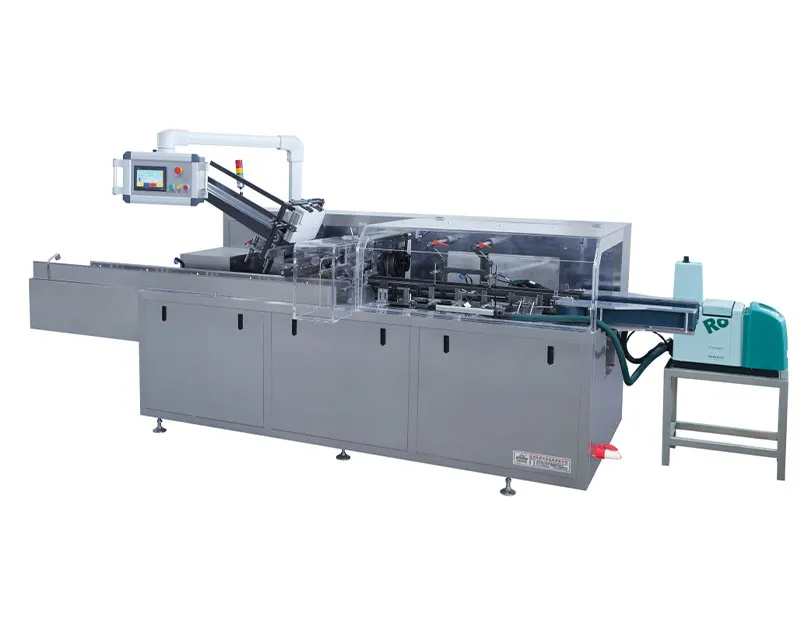
Rather than guessing, review the technical specifications for tube-specific handling to see how adjustable infeed rails and servo-driven pushers accommodate variable product shapes.
Two trends are reshaping cosmetic packaging: serialization (unique QR codes for counterfeiting prevention) and small-batch runs (driven by D2C brands). Traditional cartoning lines optimized for 200,000-unit runs are becoming dinosaurs.
The shift is toward modular platforms that support quick software-driven changeovers. You don't adjust rails with a wrench anymore—you select "Product Profile #12" on a touchscreen, and servo motors move everything into position. One contract packager in New Jersey reported reducing changeover time from 90 minutes to 12 minutes using this approach.
If your brand runs multiple SKUs or seasonal packaging, see if modular design fits your roadmap before committing to a fixed-format machine.
Cosmetic packaging is unique because the box is part of the experience. A scratched bottle or wrinkled carton doesn't just mean a return—it means a negative unboxing video reaching 10,000 viewers. Investing in a side-load cartoning platform designed specifically for unstable, compressible, or oddly shaped products isn't about speed alone. It is about protecting your brand's tactile promise.
That said, not every cosmetic line needs a horizontal cartoner. If you only package square jars that stand firmly and never roll, a vertical drop system might work fine. But if your future includes aerosols, dropper bottles, or soft laminate tubes, the gentle handling of a horizontal configuration becomes a competitive advantage.
Explore application-specific infeed designs to see how customized rail systems and starwheel feeders eliminate tipping and scratching for your specific tube and bottle formats.
Aug 31,2026
Aug 26,2026
Aug 17,2026 
GET A QUOTE