

 Jun 05
Your cartoner runs at 120 boxes per minute on the datasheet, but on the factory floor, fragile bottles tip over during insertion, changeovers take two hours, and maintenance calls are becoming weekly events. The problem may not be the brand you chose—it may be the motion technology itself.
Continuous-motion and intermittent-motion cartoners operate on fundamentally different principles. One delivers speed; the other delivers precision. Neither is universally superior, but one is almost certainly better for your specific products, volumes, and uptime requirements.
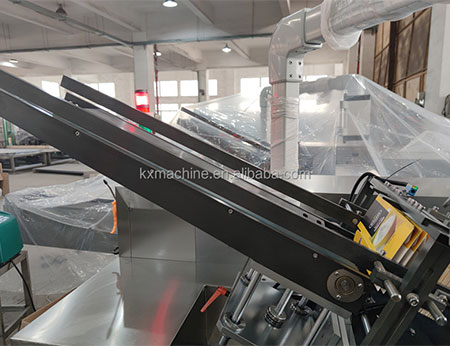
This guide explains how each technology works, compares their real-world performance across five critical dimensions, and provides a decision framework based on your actual production environment.
Understanding the core mechanical difference is essential before comparing performance metrics.
In an intermittent-motion cartoner, the carton chain advances, then stops, then advances again. During each stop, multiple operations occur simultaneously: carton erection, product insertion, flap closing, and glue application. The carton remains stationary during product insertion, allowing precise placement of delicate, heavy, or unstable items.
How it affects your operation: The start-stop cycle means your product never moves while being inserted. If you package glass vials, syringes, or tall cosmetic tubes, this stationary insertion eliminates tipping risk. However, the stop-and-start motion creates a natural speed ceiling: most intermittent machines operate reliably between 40 and 120 cartons per minute.
In a continuous-motion cartoner, the carton chain moves constantly. All operations occur while the carton travels along the machine. Product insertion requires a synchronized "flying" pusher that matches the carton's speed during the push, then retracts and returns for the next cycle. The machine never stops during normal production.
How it affects your operation: The absence of stop-start cycles allows sustained speeds of 120 to 300+ cartons per minute. For high-volume lines running millions of cartons per month, this speed advantage translates directly into lower cost per carton. However, the flying insertion mechanism requires that your product remain stable while being pushed into a moving carton. Light, tall, or top-heavy items are more likely to tip or misalign.
The following comparison table summarizes the trade-offs across five dimensions that directly impact your daily operation.
| Dimension | Intermittent-Motion | Continuous-Motion |
|---|---|---|
| Typical speed range | 40-120 cartons per minute | 120-300+ cartons per minute |
| Product handling | Stationary insertion; excellent for fragile, heavy, or unstable products | Flying insertion; requires stable, self-supporting products |
| Changeover time | 15-40 minutes; simpler mechanical adjustments | 20-60 minutes; more synchronized adjustments required |
| Component wear pattern | Brake/clutch wear; drive belt tension cycles | Cam/follower wear; continuous bearing stress |
| Initial investment | Lower (simpler mechanical design) | Higher (more complex cam and servo systems) |
Speed vs. product safety: Each 10-box-per-minute increase in continuous-motion speed adds incremental risk for delicate products. If your annual product damage rate exceeds 0.5%, the cost of rejects may outweigh the labor savings from higher speed.
Changeover frequency: For lines with more than four changeovers per shift, the longer changeover time of continuous-motion machines becomes a significant drag on OEE. Intermittent machines typically return to production 15-20 minutes faster per changeover.
Maintenance accessibility: Intermittent-motion machines generally allow in-house maintenance teams to diagnose and repair issues using standard tools. Continuous-motion machines often require specialized training and proprietary diagnostic software.
The most reliable predictor of motion type suitability is your product's behavior during insertion.
| Product Category | Why Intermittent Works |
|---|---|
| Glass bottles (over 100g) | Heavy products shift momentum during flying insertion; stationary insertion prevents tipping |
| Syringes and ampoules | Extreme fragility requires zero relative motion between product and carton |
| Tall cosmetic tubes (over 80mm height) | High center of gravity makes products unstable during movement |
| Irregular shapes (medical devices) | Custom tooling can accommodate unusual geometries during the stop |
| Clinical trial batches | Frequent changeovers (often 5-10 per shift) demand quick mechanical adjustments |
| Product Category | Why Continuous Works |
|---|---|
| Blister packs (tablets/capsules) | Low profile and stable base tolerate flying insertion well |
| Sachets and stick packs | Flexible packaging conforms during insertion; minimal tipping risk |
| Flowpacked food bars | Rectangular, stable shape with predictable movement |
| Tissue packs and wipes | Low weight and flat profile are ideal for high-speed continuous motion |
| High-volume pharmaceutical blisters | A consistent format for days or weeks makes changeover speed irrelevant |
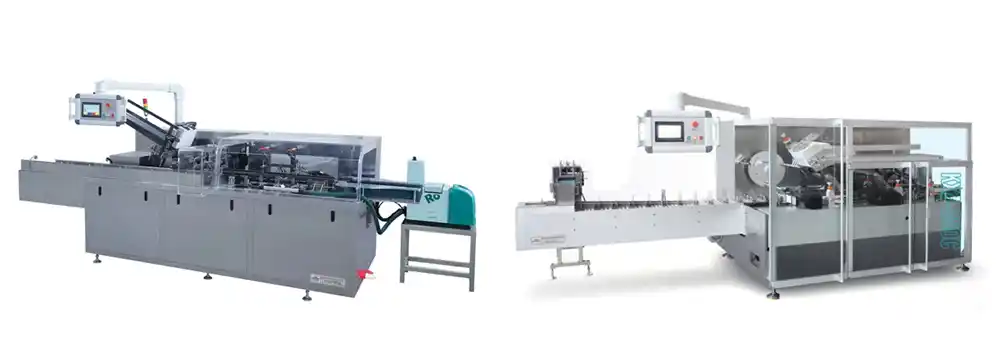
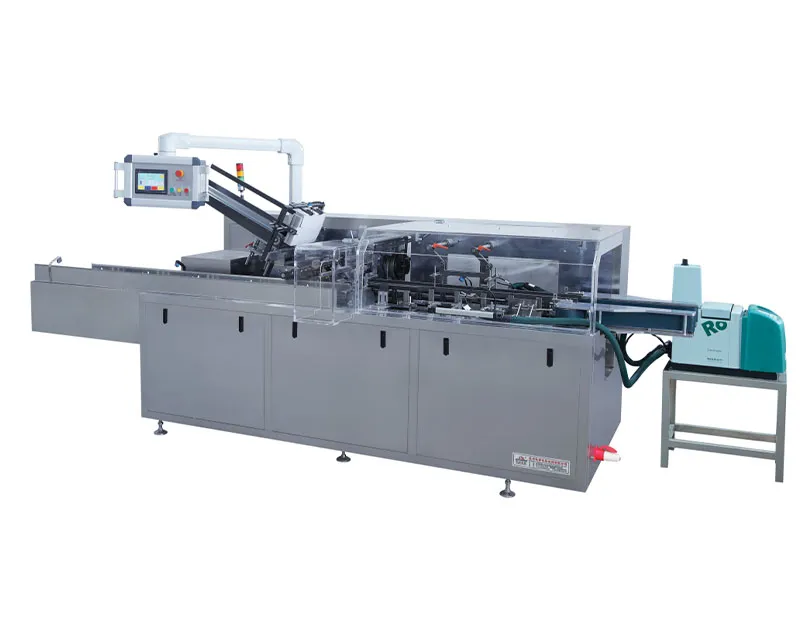
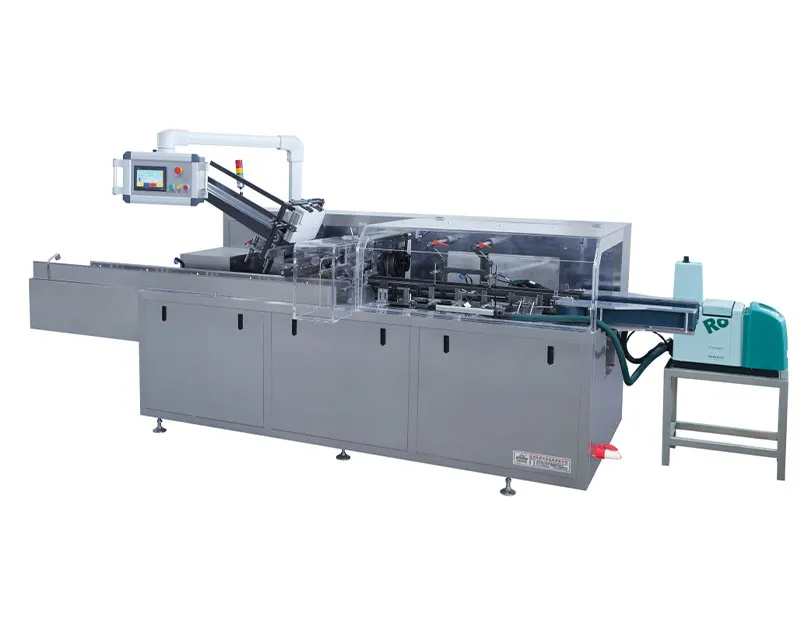
To see how KAIXIANG implements both motion types across different speed ranges, you can review the cartoning platforms designed for specific product handling requirements. View our Automated Cartoning Machine Product Series
Operation profile:
15-20 different product SKUs per week
Batch sizes: 5,000 to 30,000 cartons
Products include syringes, vials, and diagnostic cassettes
2-4 changeovers per day
Recommended motion type: Intermittent
Why: The combination of fragile products and frequent changeovers makes intermittent motion the correct choice. Stationary insertion protects expensive pharmaceutical products from damage. Faster changeover times (20 minutes vs. 45 minutes on continuous) save 1-2 hours of downtime per day.
What you sacrifice: Maximum speed. An intermittent machine running at 80 CPM will produce approximately 38,000 cartons per 8-hour shift (assuming 80% OEE). If your batches exceed 50,000 cartons, you may need a second line.
Operation profile:
One primary product format (flow-packed cereal bars)
24/5 production schedule
Two format changes per week, maximum
Batch sizes: 400,000+ cartons
Recommended motion type: Continuous
Why: Speed requirements (180+ CPM) exceed intermittent capability. The stable, rectangular product tolerates flying insertion with minimal damage risk. Infrequent changeovers make a longer setup time acceptable.
What you sacrifice: Changeover speed and product flexibility. Converting a continuous-motion line to a completely different product format may take an hour or more. This line is optimized for high-volume production of a single format.
For facilities running both delicate pharmaceutical products and high-volume food items, the choice between motion types may vary by line. Learn industry-specific packaging factors for diverse sectors, and browse carton packing machines categorized by application industry.
The traditional choice between pure intermittent and pure continuous motion is becoming less absolute. Several equipment manufacturers now offer:
Servo-driven intermittent machines with optimized acceleration profiles
Reduced dead time between cycles through aggressive servo tuning
Achievable speeds up to 150 CPM for stable products
Maintains stationary insertion benefit for delicate items
Continuous-motion machines with product stabilization systems
Vacuum or mechanical holders secure products during insertion
Allows continuous speed with items that would otherwise tip
Higher cost, but expands application range
When evaluating hybrid designs, request a factory acceptance test (FAT) with your actual products and cartons. Run at least 30 minutes at your target speed. Count rejects. A machine that theoretically handles delicate items may still show higher damage rates than a simpler intermittent design.
You now have a framework based on product stability, required speed, changeover frequency, and maintenance preferences. The next step is mapping these requirements to specific machine configurations.
Before contacting suppliers, document:
Your primary product's dimensions, weight, and center of gravity (plus any unstable or fragile characteristics)
Maximum sustained speed requirement (calculated from daily target and shift hours, not from supplier datasheets)
Changeover frequency (average number per day or per week)
Typical batch size (small batches favor intermittent; large batches favor continuous)
Maintenance team capability (in-house generalists vs. specialized technicians available)
With this preparation, you can request motion-type recommendations and test results from suppliers rather than accepting generic speed claims.
If this motion-type comparison was useful, the following articles will help you complete your cartoner evaluation:
How to Calculate Your True Throughput Requirement for Cartoning Lines
Product Handling in High-Speed Cartoners: Pushers, Pick-and-Place, and Vacuum Systems Compared
Changeover Optimization for Intermittent-Motion Cartoners
Cam and Follower Maintenance for Continuous-Motion Machines
Infeed System Design for Continuous-Motion Cartoners
Sep 14,2026 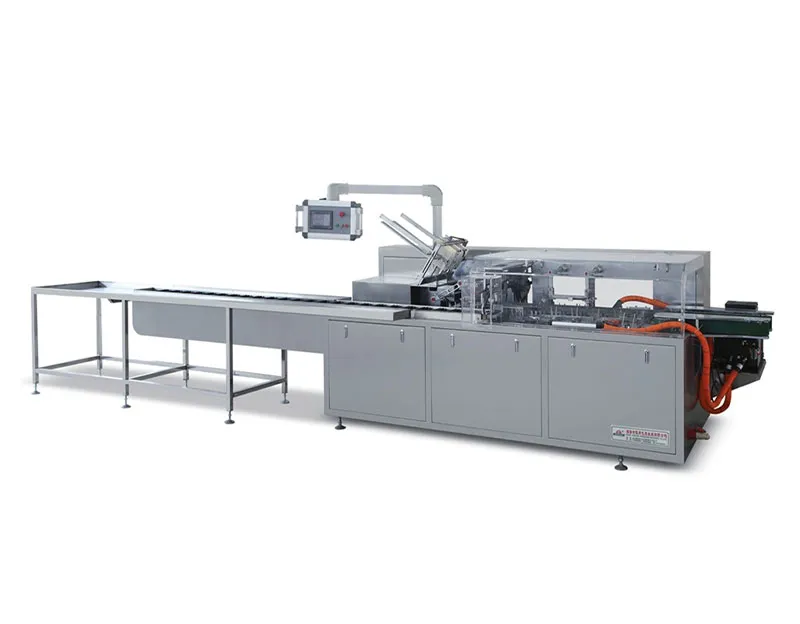
GET A QUOTE