

 Jul 13
Your stick pack machine runs at 150 pouches per minute. The pouches are sealed, coded, and ready for secondary packaging. But getting them from the sachet exit to a finished, shelf-ready carton requires more than just a conveyor connection. It requires a complete line—a coordinated system of primary packaging, collation, cartoning, and case packing equipment that works together seamlessly.
A complete stick pack to box line transforms flexible pouches into retail-ready cartons, ready for distribution. Setting up such a line involves selecting the right equipment for each stage, ensuring speed matching between machines, and planning for the unique handling characteristics of stick packs—their lightweight, flexible nature makes them particularly challenging to collate and load reliably.
This guide walks through the full line setup for stick pack to box packaging, covering the four key stages: primary packaging (stick pack formation), collation and counting, cartoning, and case packing. You will learn the equipment requirements for each stage, the integration considerations that make or break line performance, and how to match the right level of automation to your production volume.
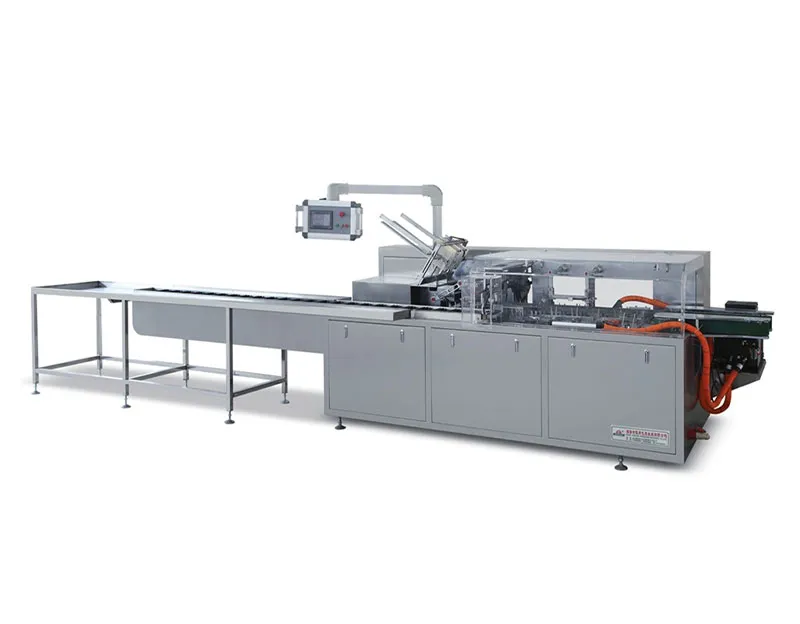
A complete stick pack to box line typically consists of four integrated stages. Understanding how each stage functions—and how they connect—is essential for successful line setup.
| Stage | Equipment | Function | Key Consideration |
|---|---|---|---|
| 1. Primary Packaging | Stick pack machine | Forms, fills, and seals individual pouches | Output speed must match downstream capacity |
| 2. Collation & Counting | Counting/stacking unit | Groups pouches into required quantities and orientations | Handling flexible, lightweight pouches reliably |
| 3. Cartoning | Cartoning machine | Erects cartons, loads grouped pouches, seals cartons | Infeed design must accommodate stack or lay-flat configurations |
| 4. Case Packing | Master carton packer | Groups cartons into shipping cases, seals cases | Speed matching with cartoner output |
The stick pack machine is the starting point of the line. It forms a flexible pouch from rollstock film, fills it with product (powder, granule, or liquid), and seals it. The output is a finished stick pack—narrow, elongated, and lightweight.
Key specification to evaluate: Output speed (pouches per minute). Your stick pack machine’s output determines the capacity required from downstream equipment. A high-speed stick pack machine can produce 150-300 pouches per minute, placing significant demands on the collation and cartoning stages.
Stick packs do not go into cartons individually—they are grouped. A typical carton may contain 5, 10, 20, or more stick packs, depending on the product and market.
The collation and counting unit performs several critical functions:
Counting: Accurately counts the number of stick packs required for each carton
Orientation: Aligns pouches in the correct position (stacked vertically or laid flat)
Grouping: Creates a collated bundle that can be transferred to the cartoner
The challenge with stick packs: Their lightweight, flexible nature makes them difficult to handle reliably. They can bend, bunch, or misalign during transport. A well-designed collation system uses vacuum or mechanical guides to maintain pouch position and prevent jams.
Configuration options:
Stack collation: Pouches are stacked vertically (one on top of another) and inserted as a block. Suitable for thicker, more rigid pouches.
Lay-flat collation: Pouches are laid flat in a single row, with multiple rows side by side in the carton. Suitable for lightweight, flexible pouches that cannot bear weight in a stack.
External source: According to industry guidance from secondary packaging specialists, stick packs require specially designed handling systems due to their small size and lightweight nature. The collation and transfer logic toward the cartoner must be carefully configured based on the number of packs per carton and pack orientation.
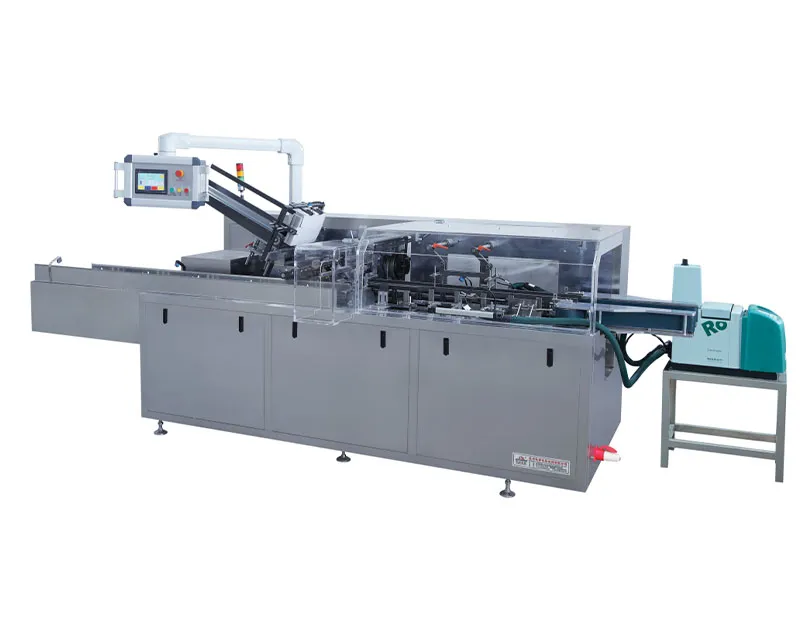
The cartoning machine is the centerpiece of the line. It erects a carton from a flat blank, receives the collated stick pack group from the collation unit, loads the group into the carton, and seals the carton flaps.
KAIXIANG‘s KXZ-130B Automatic Stick Food Cartoning Machine is specifically designed for this application. It operates at 30-60 boxes per minute, accommodating box sizes from (70-250) × (50-120) × (35-105)mm—ideal for coffee, tea, and condiment stick packs.
Infeed design is critical: The cartoner’s infeed must be compatible with the collation method (stack vs. lay-flat) and the stick pack dimensions. A mismatch between collation output and cartoner infeed will cause frequent jams.
What to verify with your supplier:
What is the acceptable stick pack length and width range?
Can the machine handle pouches that are not perfectly flat?
How does the machine reject misfed or misaligned pouches?
The final stage takes individual cartons and groups them into shipping cases. Master carton packing machines automate this process:
Product grouping: Cartons are collated into the required case pattern
Boxing: A master carton is erected and positioned for loading
Sealing: The filled case is sealed with glue or tape
KAIXIANG offers two master carton packing solutions:
| Model | Speed | Sealing Method | Best For |
|---|---|---|---|
| KXZ-400 | 16-20 boxes/min | Glue seal | Secure, permanent sealing for long-distance shipping |
| KXZ-600 | Varies by component | Tape seal | High-volume operations with flexible case sizing |
The KXZ-600 accommodates carton widths from 150-500mm, heights from 150-575mm, and lengths from 500-600mm.
To explore the specific cartoning platform designed for stick pack applications, you can review the cartoning equipment optimized for flexible pouch handling. View our Automated Cartoning Machine Product Series
Connecting these four stages requires careful planning. Here are the key integration considerations.
The fundamental rule of line integration: downstream equipment must have sufficient capacity to handle the output of upstream equipment, or accumulation must bridge the gap.
| Stage | Typical Speed | Consideration |
|---|---|---|
| Stick pack machine | 150-300 pouches/min | Output determines downstream requirements |
| Collation unit | Must match stick pack output | Groups pouches into carton quantities |
| Cartoner (KXZ-130B) | 30-60 boxes/min | If 10 pouches per carton, consumes 300-600 pouches/min |
| Case packer | 16-20 cases/min | If 10 cartons per case, consumes 160-200 cartons/min |
In this example, the cartoner can consume more pouches than the stick pack machine produces—the line is “primary-constrained.” The case packer consumes fewer cartons than the cartoner produces, requiring accumulation between the cartoner and case packer.
Accumulation—temporary storage between machines—manages speed mismatches and production variability. Without accumulation, any interruption in one machine stops the entire line.
From a stick pack to a box line, accumulation is typically needed between:
The stick pack machine and the collation unit (if speeds are mismatched)
The cartoner and the case packer (cartoner output almost always exceeds case packer capacity)
Calculating accumulation requirements:
Cartoner output: 50 boxes/min
Case packer maximum downtime (clearing a jam): 3 minutes
Required accumulation: 50 × 3 = 150 cartons
For seamless operation, all line components should share a common control architecture. This enables:
Coordinated start/stop sequences
Speed synchronization
Centralized fault reporting
Consistent recipe management
If you run multiple SKUs (different stick pack sizes, carton counts, or case patterns), changeover time becomes critical. A complete line with multiple machines requires coordinated changeovers—each machine must be adjusted for the new product.
Changeover considerations:
Stick pack machine: Film change, filling adjustment
Collation unit: Count change, orientation adjustment
Cartoner: Carton size change
Case packer: Case size and pattern change
For industry-specific stick pack to box applications, you can explore the automatic stick cartoning machine for different sectors.
The right level of automation depends on your production volume and SKU count.
| Automation Level | Description | Best For |
|---|---|---|
| Manual/Semi-automatic | Operators collect stick packs, manually count and load into cartons; semi-automatic cartoner erects and seals | Low-volume, high-mix production; contract packers |
| Fully automatic | Integrated line: stick pack machine → collation → cartoner → case packer; no manual intervention | High-volume, dedicated production lines |
Fully automatic lines can be customized in a variety of configurations—whether in line or at 90 degrees—for food, pharmaceutical, and daily chemical applications. The system can be adapted according to the number of packs per carton, pack orientation, and the transfer logic toward the cartoner.
| Condition | Why Fully Automatic Is Preferred |
|---|---|
| High volume (150,000+ cartons/month) | Labor savings justify capital investment |
| Dedicated product lines | Infrequent changeovers maximize uptime |
| Labor shortages or high labor costs | Automation reduces dependency on operators |
| Consistency requirements | Automated lines deliver repeatable quality |
| Condition | Why Semi-Automatic Is Preferred |
|---|---|
| Low to medium volume (under 150,000 cartons/month) | Capital investment is lower |
| High SKU count (20+ products) | Manual flexibility for frequent changeovers |
| Limited capital budget | Lower initial investment |
| Pilot or R&D lines | Flexibility for product development |
Profile:
One primary stick format (coffee)
Output: 200 pouches/min from stick pack machine
10 pouches per carton
24/5 production schedule
Dedicated line with infrequent changeovers
Recommended line configuration: Fully automatic integrated line
| Stage | Equipment Recommendation |
|---|---|
| Primary | High-speed stick pack machine (150-200 pouches/min) |
| Collation | Automatic counting and stacking unit with lay-flat configuration |
| Cartoning | KXZ-130B Automatic Stick Food Cartoning Machine (30-60 boxes/min) |
| Case packing | KXZ-600 Master Carton Packaging Machine (tape seal) |
Rationale: The high volume justifies full automation. The lay-flat collation is suitable for lightweight coffee sticks. The KXZ-130B’s speed range (30-60 boxes/min) matches the upstream output (200 pouches/min ÷ 10 per carton = 20 cartons/min, with buffer for variability). The KXZ-600 handles the case packing with tape sealing for efficient distribution.
Profile:
15-20 supplement SKUs with varying stick sizes
Output: 80-120 pouches/min per SKU
5-20 pouches per carton (varies by SKU)
Frequent changeovers (2-4 per day)
Moderate volume
Recommended line configuration: Semi-automatic with quick changeover features
| Stage | Equipment Recommendation |
|---|---|
| Primary | Stick pack machine with flexible film handling |
| Collation | Semi-automatic counting station with operator assistance |
| Cartoning | KXZ-130B with quick-change carton size adjustment |
| Case packing | KXZ-400 Master Carton Packaging Machine with glue seal |
Rationale: The high SKU count and frequent changeovers make full automation difficult to justify. Semi-automatic collation provides flexibility for different pack counts. The KXZ-130B offers the cartoning speed needed while allowing quick size changes. The KXZ-400’s glue seal provides secure packaging for supplement products shipping through multiple distribution channels.
You now have a framework based on the four stages of a stick pack to box line, integration considerations, and automation levels. The next step is documenting your specific requirements.
Prepare a specification document that includes:
Stick pack dimensions (length, width, thickness, weight) for your top SKUs
Stick pack output speed (pouches per minute from primary machine)
Pouches per carton (minimum and maximum across all SKUs)
Carton dimensions (minimum and maximum)
Case dimensions and pattern (cartons per case)
Changeover frequency (average number per day or week)
Annual production volume (cartons per year)
Industry-specific requirements (sanitation, validation, traceability)
With this document, suppliers can provide targeted recommendations. You can compare how different automation levels and equipment configurations address your specific production requirements.
If this stick pack to box complete line guide was useful, the following articles will help you complete your packaging line planning:
Stick Pack Collation System Design: Stack vs Lay-Flat Configuration
Speed Matching and Buffering Strategies for Stick Pack Lines
Changeover Optimization for Multi-SKU Stick Pack Lines
Glue Seal vs Tape Seal for Stick Pack Master Cartons
Accumulation System Sizing for Stick Pack to Box Lines
Sep 14,2026 
GET A QUOTE