

 May 23
You have a tissue production line running at full speed. Soft, fluffy facial tissues are flowing out of the converting machine. Now comes the part everyone underestimates: getting those flimsy tissue packs into retail-ready cartons without crushing them, jamming the line, or tearing the overwrap.
Tissue packaging is different from almost any other cartoning application. The product is soft, compressible, and surprisingly heavy for its size. A stack of 200 facial tissues can weigh more than a bottle of liquid soap, but it has zero structural rigidity. Push it wrong, and it deforms. Drop it, and it might not recover its shape.
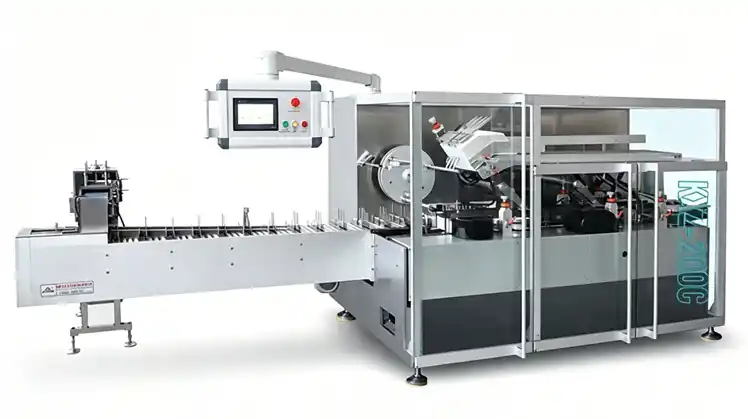
Here is what equipment brochures do not tell you about compressible products. Standard cartoning machinery assumes the product has some rigidity. A bottle resists compression. A tube has structure. A blister pack holds its shape.
A tissue pack does none of these things. Apply pressure from the wrong angle, and the pack bulges in the middle. The bulge catches on the carton flap. The machine jams. By the time an operator clears the jam, you have lost dozens of cycles and probably damaged the carton opener.
A tissue manufacturer in Southeast Asia shared their early experience with a standard cartoner: "We bought a machine rated for 80 cartons per minute. We could never run it above 45 because the tissue packs kept catching on the flap. We spent more time clearing jams than running production."
The solution lies in how the product is supported during loading.
Unlike rigid products that can be pushed from behind, tissue packs need to be cradled during transfer. The loading mechanism must support the entire pack, not just push against the back edge.
The engineering approaches that work for soft hygiene products include:
Lug chain infeed: Individual carriers support the tissue pack from underneath during the entire loading stroke
Servo-controlled loading: The push stroke speed is matched to the carton's movement, eliminating the "snap" that deforms soft packs
Extended carton opening: The carton must be held fully open for a longer duration to accommodate the pack's tendency to expand after release
A major European tissue brand redesigned their cartoning line around lug chain infeed. The result, according to their published case study, was a jam rate reduction from 4.2% to 0.3% and the ability to run at the machine's rated speed for the first time.
Tissue packs vary dramatically in stack height. A pocket pack might be 15mm thick. A family-size facial tissue box could be 105mm thick. The same cartoning machine must handle both.
The challenge is that the loading mechanism must accommodate different stack heights without crushing the product. A pusher set for a thick pack will compress a thin pack. A pusher set for a thin pack will not reach a thick pack.
Quick-change format adjustment becomes essential. The best systems use servo-driven rails and pushers that automatically adjust according to a stored recipe. The operator selects "Product A" on a touchscreen, and the machine reconfigures itself in under two minutes.
For operations that run multiple tissue SKUs, review the format change specifications for high-volume hygiene applications before assuming a manually adjusted machine will meet your changeover frequency needs.
Most tissue packs are overwrapped in polypropylene film before cartoning. That film is slippery. It also generates static electricity, causing packs to stick to guides or to each other.
The slippery surface means standard friction-based infeed belts may not grip the packs reliably. The pack slides instead of advancing at the correct pitch. The solution is positive drive infeed using lug chains or timing belts with cleats that physically capture each pack.
The static electricity issue requires active static elimination. Passive static bars (carbon fiber brushes) may not be sufficient for high-speed lines. A tissue packager in the US reported that installing ionizing static eliminators on their infeed conveyor reduced mis-feed events by 70%.
Before committing to any cartoning equipment for tissue packs, run this simple test. Take a sample of your product and place it in a carton by hand. Close the flaps. Does the carton bulge? Does the pack spring back to its original shape?
Now stack a pallet of those cartons. Simulate a week of warehouse storage. Open the bottom carton. Is the tissue pack still square, or has it taken a permanent set from the compression?
If the pack deforms under its own weight in storage, no cartoning machine will solve that problem. The issue is primary pack density or carton design, not the equipment.
A contract packager specializing in hygiene products noted: "We reject tissue packs that are under-packed. If there is too much air in the pack, it will compress during palletizing and the carton will look half-empty. No machine can fix that. The tissue manufacturer has to fix the primary packing."
The product pages for tissue cartoning equipment often list impressive speeds: 60, 100, even 200 cartons per minute. Those numbers are achievable under ideal conditions with dedicated operators and perfect product flow.
Real-world sustained speeds for tissue pack cartoning are typically 60-80% of the rated maximum. The difference comes from:
Product variation: Tissue packs are never perfectly uniform
Static issues: Inconsistent pack release
Carton quality: Board warpage or inconsistent flap tension
A mid-sized tissue converter reported their experience: "The brochure said 120 cartons per minute. We run at 85 consistently. That is still 3x faster than our old semi-automatic line, so we are happy. But go in with realistic expectations."
For a detailed look at how different machine configurations affect real-world throughput for compressible products, explore the performance specifications for tissue-specific cartoning platforms.
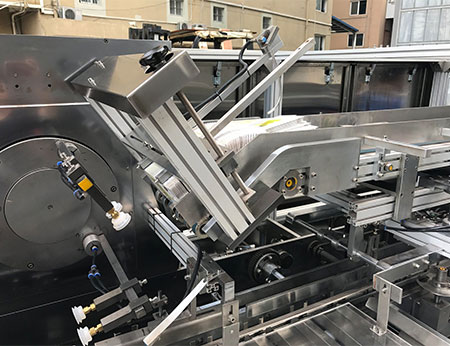
Tissue cartons typically use tuck flap sealing rather than glue. The reason is consumer behavior. Tissue boxes are opened and closed repeatedly until the tissues are used up. Glue seals are permanent. Tuck flaps allow reclosure.
Tuck flap cartoning requires precise flap folding. The flaps must be pre-broken (scored) to fold cleanly. The cartoning machine must fold each flap in the correct sequence. Any mis-fold creates a box that will not stay closed.
The reliability of tuck flap cartoning depends heavily on carton board quality. Boards with inconsistent scoring or warped flaps will jam. A tissue manufacturer in India switched to a higher-grade carton board and saw their flap-related jam rate drop from 5% to 0.8% overnight.
Tissue converting generates paper dust. That dust gets everywhere, including into the cartoning machine. Paper dust on vacuum suckers reduces their ability to open cartons. Dust on glue nozzles (if you use glue) creates inconsistent application.
Dust management requires:
Enclosed machine frames to keep dust out of moving parts
Vacuum filters that can be cleaned quickly
Positive air purge on sensors and cameras
A facial tissue producer learned this the hard way. Their first cartoner had open guide rails and exposed drive chains. Within six months, dust accumulation caused weekly breakdowns. Their replacement machine had sealed bearing housings and daily blowdown ports. Downtime fell by 80%.
Tissue cartons are palletized in tall stacks—sometimes 8 to 10 feet high. The cartons at the bottom must withstand the compression from above. If the cartoning process has weakened the carton structure (through rough handling or improper flap sealing), those bottom cartons may collapse during storage.
A collapse in a warehouse pallet is not just a mess to clean up. It can damage dozens of cartons and require manual repacking. Tissue manufacturers who ship to club stores (Costco, Sam's Club) are especially sensitive to this because pallets are often stacked two high in the warehouse.
The cartoning machine must handle cartons gently enough that the structural integrity remains intact. This means no rough flap folding, no excessive compression during loading, and no impact damage during carton transfer.
The tissue packaging industry segments into three volume tiers, each with different equipment needs.
| Volume Tier | Daily Output | Recommended Approach |
|---|---|---|
| Small (regional brand) | Under 20,000 cartons | Semi-automatic with manual pack loading |
| Medium (national brand) | 20,000 - 80,000 cartons | Automatic with lug chain infeed and recipe storage |
| Large (multinational) | Over 80,000 cartons | High-speed automatic with vision inspection and integrated palletizing |
A small regional tissue maker might run one shift with manual carton erection and packing. A multinational producer needs continuous operation at 200 cartons per minute with automated changeovers.
The mistake is buying a machine that is too complex for your volume or too simple for your growth plans.
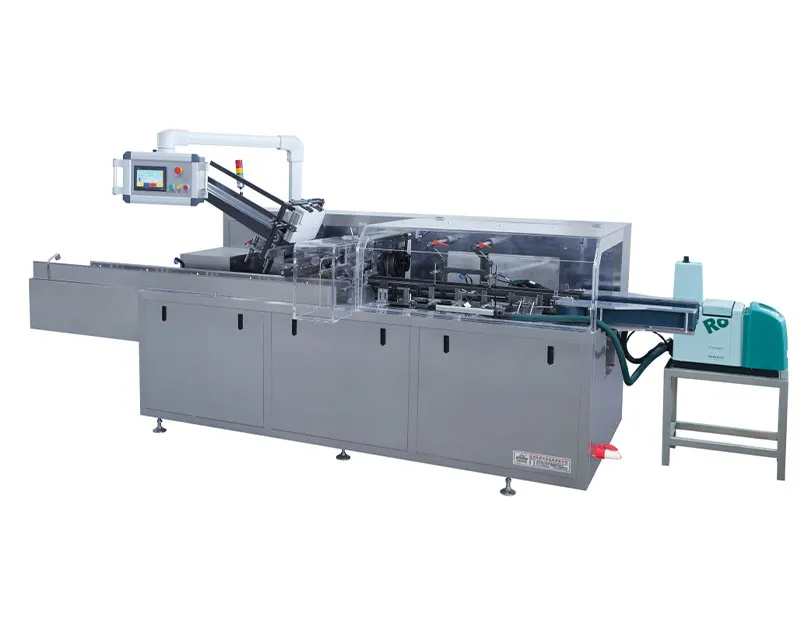
Tissue packs demand specific engineering attention: lug chain infeed to prevent buckling, servo-controlled loading to eliminate crushing, and quick-change format adjustment to handle multiple pack sizes. The KXZ-130B and KXZ-280C models from Kaixiang are designed specifically for these challenges, with speed ranges from 30 to 200 cartons per minute and carton dimension flexibility to accommodate everything from pocket packs to family-size boxes.
The difference between a general-purpose cartoner and a tissue-optimized platform shows up in jam rates, changeover times, and operator frustration levels. For tissue manufacturers running multiple SKUs, this difference directly affects profitability.
If your current tissue packing line struggles with jams, deformed packs, or long changeovers, compare the tissue-specific configurations for different production volumes to see how purpose-designed infeed and carton handling can resolve those issues.
Sep 14,2026
Aug 31,2026 
GET A QUOTE