

 Aug 03
Your stick pack machine produces 150 pouches per minute, each one filled, sealed, and ready for secondary packaging. But those individual pouches cannot simply be dropped into a carton—they must be grouped, counted, and presented to the cartoner in a consistent, reliable format. The collation system is the bridge between primary and secondary packaging, and the configuration you choose determines whether your line runs smoothly or struggles with jams, misalignment, and rejected cartons.
The two primary stick pack collation configurations are stack collation and lay-flat collation. One stacks pouches vertically, one on top of another, before inserting them as a block. The other lays pouches flat in a single row, with multiple rows side by side in the carton. Each configuration has distinct design requirements, product suitability, and implications for cartoner infeed design.
This guide explains the differences between these two approaches, helps you evaluate which configuration fits your product characteristics, and provides practical considerations for integrating the collation system with your cartoning line.
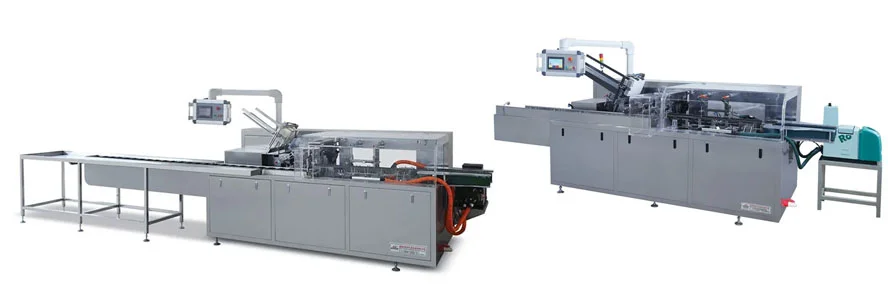
A collation system is the section of a stick pack to box line responsible for counting, arranging, and positioning stick packs according to the required carton configuration. After primary packaging, stick packs are conveyed to the counting and stacking unit, which acts as the link between sachet production and final carton loading.
| Function | Description | Why It Matters |
|---|---|---|
| Counting | Accurately counts the number of stick packs required for each carton | Prevents under-filled or over-filled cartons |
| Orientation | Aligns pouches in the correct position (stacked or laid flat) | Ensures pouches fit properly inside the carton |
| Grouping | Creates a collated bundle that can be transferred to the cartoner | Provides a consistent, repeatable load for the cartoner infeed |
| Transfer | Delivers the grouped pouches to the cartoner insertion point | Synchronizes collation output with cartoner cycle |
The collation system can be adapted according to the number of packs per carton, pack orientation, and the transfer logic toward the cartoner. This flexibility is essential because different products and carton formats require different collation approaches.
Stick packs are narrow, elongated pouches filled with powders, granules, or liquids. They are lightweight, flexible, and often have slippery surfaces. These characteristics make them difficult to handle reliably in a collation system. As one packaging automation specialist notes, a multi-lane stick pack machine rarely hands you one clean stream—multiple lanes discharge sticks on their own timing. Hence, the cartoner sees parallel streams arriving slightly out of phase.
The collation system must reconcile these multiple streams into one consistent carton count, transforming a continuous, loose, multi-lane stream into a verified count inside a carton without toppling a single slim stick.
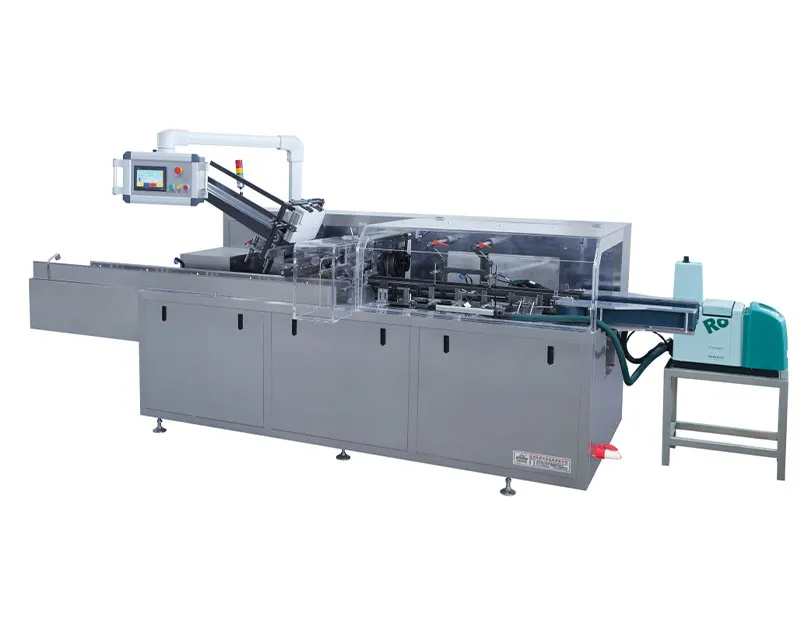
To understand the cartoning equipment that receives collated stick packs, you can review the cartoning platform designed specifically for stick pack applications. View our Stick Pack Cartoning Machine overview
The fundamental difference between stack and lay-flat collation is the orientation of the stick packs when they are grouped and inserted into the carton.
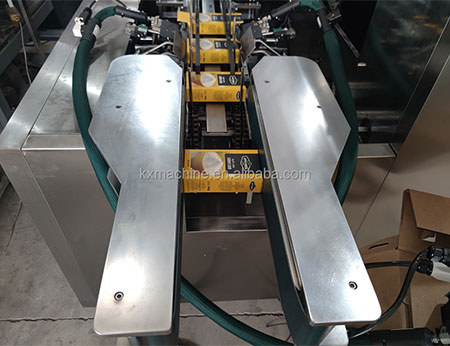
In stack collation, stick packs are stacked vertically—one pouch on top of another—and inserted as a block into the carton. The pouches are oriented upright, with their faces parallel to each other.
How it works:
Stick packs are counted and oriented upright
Pouches are stacked one on top of another to form a vertical block
The stack is transferred to the cartoner infeed
A pusher inserts the entire stack into the carton from the side or top
Best for: Thicker, more rigid pouches that can support weight without deformation
Typical applications: Coffee sticks, supplement sachets with thicker film laminates
In lay-flat collation, stick packs are laid flat in a single row, with multiple rows side by side in the carton. The pouches are oriented horizontally, with their faces flat against the carton bottom.
How it works:
Stick packs are counted and oriented flat
Pouches are arranged in rows within the carton cavity
The entire group is loaded into the carton from the top or side
Best for: Lightweight, flexible pouches that cannot bear weight in a stack
Typical applications: Powder supplements with thin film, liquid sachets, products where pouch rigidity is low
| Dimension | Stack Collation | Lay-Flat Collation |
|---|---|---|
| Pouch orientation | Vertical (upright) | Horizontal (flat) |
| Loading direction | Block inserted as stack | Rows arranged in carton |
| Weight-bearing requirement | Pouches must support weight of those above | No weight-bearing requirement |
| Carton height utilization | Efficient—pouches fill carton height | Less efficient—carton height may have empty space |
| Product protection | Risk of crushing lower pouches | Minimal—no stacking pressure |
| Typical speed | Moderate-high | Moderate |
| Suitable pouch types | Thicker, more rigid pouches | Lightweight, flexible pouches |
The collation configuration is closely tied to the cartoner insertion method. According to industry practice, the counting and stacking unit can directly insert stick packs into the carton in cases of top loading with flat blanks. With pre-glued cartons, the cartoning machine provides side loading.
Flat blank cartons + top loading: Often paired with lay-flat or stack collation, depending on the product
Pre-glued cartons + side loading: More commonly paired with stack collation, where the stack is pushed horizontally into the carton
External source: According to Universal Pack, the counting and stacking unit is responsible for counting, arranging, and positioning the stick packs according to the required configuration. The system can be adapted according to the number of packs per carton, pack orientation, and the transfer logic toward the cartoner. In flat blank carton configurations, the unit feeds the top-loading section.
Each collation configuration requires specific design considerations to ensure reliable operation.
1. Pouch Rigidity and Weight-Bearing Capacity
The most critical factor for stack collation is whether the pouches can support the weight of those above them. If pouches are too flexible or too lightly filled, the bottom pouches will deform under the weight of the stack, leading to jams or damaged product.
What to verify: Test stack height with actual product. A 10-pouch stack of lightweight powder sachets may crush the bottom pouches, while a 5-pouch stack of thicker coffee sticks may be perfectly fine.
2. Stack Stability During Transfer
The stacked block must remain stable during transfer from the collation unit to the cartoner. Any misalignment or shifting will cause jams at the cartoner infeed.
What to verify: Confirm that the transfer mechanism maintains stack integrity. Vacuum-assisted or guided transfer systems may be required for unstable stacks.
3. Stack Height vs Carton Size
The stack height must match the carton interior height. If the stack is too tall, the carton will not close properly. If too short, pouches may shift during transport.
What to verify: Carton dimensions must be specified before the collation system is designed. The KXZ-130B accommodates box sizes from (70-250) × (50-120) × (35-105)mm—verify that your stack height falls within this range.
1. Pouch Slipperiness and Positioning
Lay-flat collation requires pouches to be positioned precisely within the carton cavity. Slippery pouch surfaces can cause pouches to slide out of position during transfer.
What to verify: Confirm that the collation system includes guides or positioning features to maintain pouch placement. Vacuum assistance may be required for very slippery pouches.
2. Row Configuration and Carton Width
The number of rows and the width of each row must match the carton interior width. If rows are too wide, the carton will not close. If too narrow, pouches may shift.
What to verify: Carton width must accommodate the total width of all rows plus any required spacing.
3. Loading Direction
Lay-flat collation is often paired with top-loading cartoners, where the grouped pouches are dropped into the carton from above. The transfer mechanism must maintain pouch orientation during the drop.
What to verify: Confirm that the transfer mechanism is compatible with your cartoner's loading method (top-loading vs side-loading).
Regardless of configuration, the collation system typically uses a “bucket” approach: sticks are counted, collated to the carton quantity, and released into a bucket; the cartoner then draws one complete bucket per carton cycle. The bucket is the decoupling element between continuous discharge and intermittent indexing. The bucket geometry is matched to the lane discharge by design, and the carton count is commonly configurable from roughly 5 to 50 sticks on the cartoner screen.
For stick pack-to-carton production requirements across various industries, learn how our Automatic Stick Food Cartoning Machine fits within tailored packaging solutions for different sectors.
Profile:
Coffee sticks with thicker film laminate
Pouch weight: 2-3g per stick
10 sticks per carton
Carton size: approximately 120mm × 40mm × 30mm
Cartoner: KXZ-130B (30-60 boxes/min)
Recommended configuration: Stack collation
Rationale: Coffee sticks typically have sufficient rigidity to support stacking. The upright orientation allows efficient use of carton height—a 10-stick stack fills the carton vertically. The stack can be pushed horizontally into the carton, compatible with side-loading cartoners like the KXZ-130B.
Key specification: Verify that the stack height (10 sticks × pouch thickness) fits within the KXZ-130B’s box height range of 35-105mm.
Profile:
Supplement sachets with thin film laminate
Pouch weight: 0.8-1.5g per sachet
20 sachets per carton (arranged in 4 rows × 5 columns)
Carton size: approximately 150mm × 100mm × 30mm
Top-loading cartoner with flat blank cartons
Recommended configuration: Lay-flat collation
Rationale: Lightweight sachets cannot support stacking without crushing. Lay-flat collation eliminates weight-bearing concerns. The flat arrangement allows efficient use of carton footprint. The configuration is compatible with top-loading cartoners using flat blanks.
Key specification: Confirm that the collation system includes positioning guides to maintain sachet placement during transfer, given the slippery nature of thin film laminates.
Profile:
Multiple SKUs with varying stick pack sizes and counts
Some products require stack collation; others require lay-flat
Frequent changeovers (2-4 per day)
Recommended configuration: Configurable collation system with recipe storage
Rationale: A configurable system allows the same collation unit to handle both stack and lay-flat configurations through adjustable settings. Recipe storage enables rapid changeover between product configurations.
Key specification: Verify that the changeover between configurations can be completed within your target changeover time (typically 15-30 minutes for multi-SKU operations).
External source: On-edge placement is an advanced collation option where stick packs are turned vertically and inserted on edge into the carton. This can be combined with multi-level cartoning—inserting stick packs on edge in a two-level box, with or without a separator between the two levels. This approach maximizes carton space utilization for products that would otherwise require larger cartons.
You now have a framework based on pouch characteristics, carton dimensions, and loading method. The next step is documenting your specific requirements before finalizing the collation system design.
Prepare a specification document that includes:
Pouch dimensions and weight (length, width, thickness, weight per pouch)
Pouch material and rigidity (film type, stiffness, ability to support weight)
Pouches per carton (minimum and maximum across all SKUs)
Carton dimensions (interior width, height, depth)
Carton type (flat blank or pre-glued)
Cartoner loading method (top-loading or side-loading)
Cartoner speed (boxes per minute)
Changeover frequency (average number per day)
With this document, you can evaluate which collation configuration—stack, lay-flat, or a configurable system—best addresses your specific production requirements.
Top-Loading vs Side-Loading Cartoners for Stick Packs
Pouch Rigidity Testing for Stack Collation Feasibility
Multi-Level Cartoning for Stick Packs
Changeover Optimization for Configurable Collation Systems
Counting Accuracy in Stick Pack Collation Systems
Sep 14,2026
Aug 31,2026
Aug 26,2026 
GET A QUOTE