

 Jul 20
Your stick pack machine produces 150 pouches per minute. Your cartoner runs at 50 boxes per minute. Your case packer handles 18 cases per minute. On paper, these numbers look disconnected—and without proper line design, they are. The speed gaps between these machines are where bottlenecks form, operators scramble, and production targets slip.
Stick pack lines present unique challenges for speed matching. The primary packaging machine outputs individual pouches at high speed. The cartoner groups those pouches into cartons at a lower rate. The case packer groups cartons into shipping cases at an even lower rate. Each transition requires careful planning—and the lightweight, flexible nature of stick packs makes accumulation and buffering particularly critical.
This guide explains the core principles of speed matching and buffering for stick pack lines. You will learn how to calculate speed ratios between line components, determine accumulation requirements, select the right buffer type for your application, and avoid common design mistakes that reduce line efficiency.
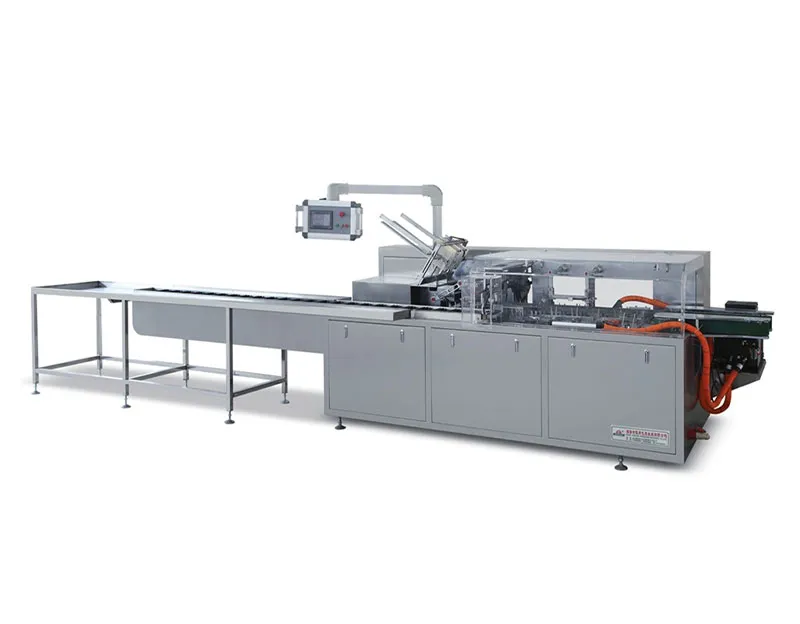
The first step in line integration is understanding the speed characteristics of each machine. KAIXIANG‘s stick pack cartoning solutions illustrate the typical speed progression.
| Line Stage | Typical Equipment | Speed Range | Output Unit |
|---|---|---|---|
| Primary packaging | Stick pack machine | 150-300 | pouches/min |
| Cartoning | KXZ-130B | 30-60 | boxes/min |
| Case packing | KXZ-400 | 16-20 | cases/min |
The speed relationship between stages is not directly comparable because each stage produces different units. To understand the line balance, convert all speeds to a common unit—typically pouches per minute.
Example calculation:
Stick pack machine: 180 pouches/min
Cartoner (KXZ-130B): 50 boxes/min × 10 pouches/box = 500 pouches/min consumption rate
Case packer (KXZ-400): 18 cases/min × 10 cartons/case × 10 pouches/carton = 1,800 pouches/min consumption rate
The result: The stick pack machine produces 180 pouches/min. The cartoner can consume up to 500 pouches/min—meaning the cartoner is “starved” and operates below capacity. The case packer can consume 1,800 pouches/min—far more than the cartoner produces. In this configuration, the stick pack machine is the bottleneck.
The more common scenario:
Stick pack machine: 300 pouches/min
Cartoner (KXZ-130B): 60 boxes/min × 5 pouches/box = 300 pouches/min
Case packer (KXZ-400): 18 cases/min × 10 cartons/case × 5 pouches/carton = 900 pouches/min
Here, the cartoner and stick pack machine are perfectly matched at 300 pouches/min. The case packer has excess capacity. But any variation—a momentary stick pack machine slowdown, a cartoner micro-stop—will create imbalance.
To explore the specific cartoning platform designed for stick pack applications, you can review the cartoning equipment optimized for flexible pouch handling. View our automatic stick food cartoning machine overview
When upstream and downstream speeds are not perfectly matched—or when one machine stops briefly—accumulation and buffering bridge the gap.
According to secondary packaging integration experts, accumulation and buffering are distinct but complementary concepts:
Accumulation: Temporarily storing products when downstream equipment cannot accept them
Buffering: Delivering products at a different rate than they are received
In practice, the terms are often used interchangeably. Both serve the same purpose: isolating equipment outages and allowing recovery without negatively impacting line balance.
Without buffering, any interruption in any machine stops the entire line. A 2-minute jam on the case packer would force the cartoner to stop—losing 300 pouches of production. With buffering, the cartoner continues running while the case packer is cleared, and the accumulated pouches feed the case packer as it resumes.
As one industry analysis notes, buffering and accumulation are the keys to making high-speed lines work successfully to maximize throughput. Higher speed lines without accumulation will see a greater reduction in units produced.
The industry consensus is to provide 2 to 3 minutes of buffer time at the bottleneck rate. Alternatively, size the buffer at 1.5× the estimated mean time to repair (MTTR) if that data is available.
Example:
Bottleneck rate: 300 pouches/min
Target buffer time: 2 minutes
Required buffer capacity: 300 × 2 = 600 pouches
This means the accumulation system must hold at least 600 pouches to keep upstream equipment running during a 2-minute downstream stoppage.
External source: A study on buffer sizing for high-speed packaging lines found that strategically placed buffers provide significant benefits, with recommendations typically ranging from 2 to 3 minutes of buffer time at the bottleneck rate. This principle applies across fast-moving consumer goods packaging lines, including stick pack applications.
Different accumulation methods suit different line configurations and product types.
Products accumulate directly on the conveyor between machines. This is the simplest and most common buffering method.
Best for: Short-term buffering (1-3 minutes), lines with consistent product flow
For stick packs: In-line accumulation works well for individual pouches moving on a conveyor. However, stick packs' lightweight nature means they can be easily displaced by back pressure—minimum-pressure or zero-pressure accumulation conveyors are recommended.
Products are diverted to a separate table and returned to the main flow as needed. This provides medium-term buffering (5-15 minutes).
Best for: Lines with moderate speed mismatches, operations requiring manual intervention
For stick packs: Accumulation tables can handle grouped pouches or cartons, but may require careful design to prevent pouch misalignment.
Products are distributed across multiple lanes that feed downstream equipment sequentially.
Best for: High-speed lines requiring extended buffering or multiple SKUs
For stick packs: Multi-lane systems can accommodate the high output of modern stick pack machines while maintaining orientation.
These space-saving designs stack the accumulation path vertically, buffering hundreds of boxes in a compact footprint.
Best for: Facilities with limited floor space, high-volume lines
For stick packs: Alpine conveyors are ideally suited for flexible packaging, bottles, or small cartons. They can handle individual pouches or cartons, providing significant buffer capacity in a small area.
| Buffer Type | Capacity | Footprint | Best For |
|---|---|---|---|
| In-line conveyor | Low-medium | Small | Short-term buffering, simple lines |
| Accumulation table | Medium | Medium | Moderate buffering, manual intervention |
| Multi-lane | Medium-high | Medium-large | High-speed, multiple SKUs |
| Alpine/spiral | High | Small | Space-constrained, high-volume |
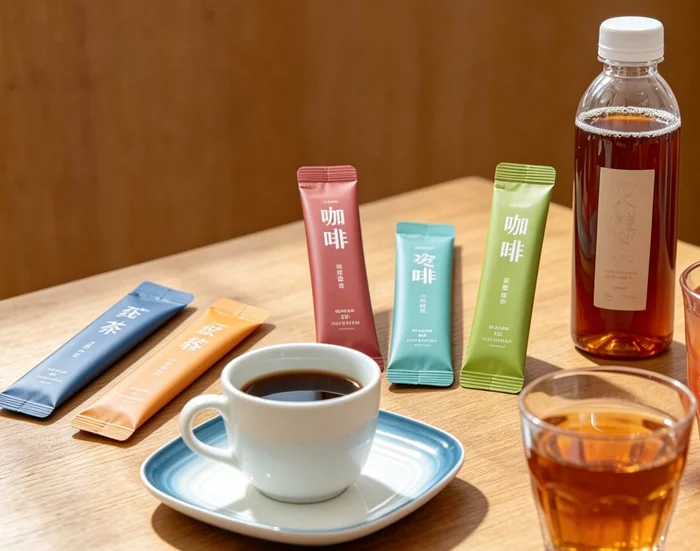
We provide customized packaging solutions for coffee, tea, and condiment stick pouch production, supporting both single-serve stick packs and finished carton packaging. Browse our complete lineup of stick pack packaging machines.
Use this structured approach to determine the buffering needs for your stick pack line.
The bottleneck is the machine with the lowest capacity in the line—the one that limits overall throughput. In many stick pack lines, the cartoner is the bottleneck because it groups pouches into cartons.
How to identify: Compare the consumption rate of each downstream machine to the output of the upstream machine. The machine with the lowest relative capacity is the bottleneck.
Calculate the sustained output of the bottleneck machine in pouches per minute (or cartons per minute, converted to pouches).
How long does each downstream machine typically stop? Consider:
Jam clearance time
Changeover time
Planned maintenance
Unplanned breakdowns
Formula: Buffer capacity = Bottleneck rate (pouches/min) × Target buffer time (minutes)
| Target Buffer Time | Application |
|---|---|
| 1-2 minutes | Short jams, minor stoppages |
| 2-3 minutes | Typical recommendation |
| 5+ minutes | Frequent changeovers, long repair times |
Based on the required capacity, floor space, and budget, select the appropriate buffer type. Remember that buffer systems provide temporary storage space for products when a brief line interruption occurs and help ensure constant product flow during speed changes.
Example calculation for a stick pack line:
Cartoner (bottleneck): 50 boxes/min × 10 pouches/box = 500 pouches/min
Typical case packer jam clearance: 2 minutes
Required buffer: 500 × 2 = 1,000 pouches (or 100 cartons)
The collation and counting unit—which groups stick packs before cartoning—is often overlooked in speed calculations. If the collation unit cannot keep up with the stick pack machine, pouches will back up and jam.
Solution: Ensure the collation unit's capacity exceeds the stick pack machine’s output by at least 10-15%.
Using the machine's maximum advertised speed rather than sustained operating speed leads to undersized buffers.
Solution: Base calculations on sustained operating speed (typically 70-85% of peak speed for most lines).
Changeovers consume time without producing output. If your line performs multiple changeovers per day, buffer requirements increase.
Solution: Subtract changeover time from available production hours before calculating required speeds.
Stick packs are lightweight and flexible—they do not behave like rigid products on conveyors. Standard accumulation methods may not work.
Solution: Test accumulation methods with actual stick packs. Consider vacuum-assisted or guided accumulation systems.
The speed gap between cartoner and case packer is often the largest in the line. A cartoner at 50 boxes/min produces far more cartons than a case packer at 18 cases/min can consume.
Solution: Always include accumulation between cartoner and case packer. This is where the greatest speed mismatch occurs.
Profile:
Stick pack machine: 200 pouches/min
Cartoner (KXZ-130B): 40 boxes/min × 5 pouches/box = 200 pouches/min (matched)
Case packer (KXZ-400): 18 cases/min × 8 cartons/case × 5 pouches/carton = 720 pouches/min (excess capacity)
Analysis: The stick pack machine and cartoner are perfectly matched—no buffer needed between them. However, the case packer has excess capacity; the cartoner is the bottleneck. A small buffer (2-3 minutes of cartoner output) between cartoner and case packer protects against case packer jams.
Recommended buffer: 40 boxes/min × 2 minutes = 80 cartons (in-line accumulation)
Profile:
Stick pack machine: 120 pouches/min (varies by SKU)
Cartoner (KXZ-130B): 30 boxes/min × 4-10 pouches/box (varies by SKU)
Case packer (KXZ-400): 16 cases/min × 10 cartons/case × variable pouches/carton
Analysis: The speed relationship changes with each SKU. The cartoner may be the bottleneck for some products and the stick pack machine for others. Frequent changeovers (2-4 per day) add complexity.
Recommended buffer: Multi-lane accumulation between stick pack machine and cartoner, plus in-line accumulation between cartoner and case packer. Total buffer capacity: 15 minutes of production at bottleneck rate.
External source: A key consideration for stick pack lines is that the cartoner's cycle speed is often the pacing constraint, not the upstream machine. Intermittent horizontal cartoners commonly run 30 to 60 cartons a minute on a multi-lane stick line. Understanding this constraint is essential for proper buffer sizing.
You now have a framework based on speed calculation, buffer sizing, and common mistakes to avoid. The next step is documenting your specific requirements.
Prepare a specification document that includes:
Stick pack machine output (sustained pouches per minute)
Pouches per carton (minimum and maximum across all SKUs)
Cartoner speed (sustained boxes per minute)
Cartons per case (minimum and maximum)
Case packer speed (sustained cases per minute)
Typical downtime per machine (jam clearance, changeover)
Changeover frequency (average number per day)
Available floor space for accumulation
With this document, suppliers can provide targeted recommendations for buffer type and capacity that match your specific line configuration.
If this speed matching and buffering guide was useful, the following articles will help you complete your stick pack line planning:
Calculating Buffer Capacity for Stick Pack Lines: A Step-by-Step Worksheet
Accumulation Conveyor Selection for Lightweight Flexible Pouches
Bottleneck Identification in Multi-Stage Packaging Lines
Case Packer Speed Matching: Calculating the Cartoner-to-Case Packer Gap
Changeover Impact on Line Speed and Buffer Requirements
Sep 14,2026 
GET A QUOTE