

 May 29
When your production line runs at 150 boxes per minute but your cartoning machine creates a bottleneck at 80, the entire packaging operation becomes constrained by the slowest link. Many buyers focus solely on the maximum speed rating printed on a machine's datasheet—only to discover later that real-world throughput falls 30-40% lower due to product type, infeed configuration, or changeover frequency.
This guide provides a decision framework for production managers and engineering leads who need to evaluate high speed carton packers. Rather than comparing spec sheets side by side, you will learn how to calculate your true throughput requirements, understand the relationship between infeed stability and machine efficiency, and identify the flexibility features that protect your investment as product mix evolves.
Most suppliers advertise a single number: "maximum speed of 200 boxes/min." However, industry data from the Packaging Machinery Manufacturers Institute (PMMI) indicates that actual sustained operating speed for high speed cartoners typically ranges between 60-75% of rated maximum when running mixed products. Before evaluating any machine, you need to understand three distinct throughput metrics.
| Throughput Metric | What It Measures | Why It Matters for Your Decision |
|---|---|---|
| Rated maximum speed (boxes/min) | Machine speed under ideal conditions: consistent product dimensions, perfect carton quality, steady infeed flow | Useful for comparing mechanical potential between models, but never achievable in daily production |
| Sustained operating speed | Actual speed maintained over an 8-hour shift, including minor stops for carton jams or sensor cleaning | The number you should use for capacity planning; typically 15-25% lower than rated maximum |
| Effective OEE speed | Sustained speed × quality rate × availability (after subtracting changeover time) | The only number that tells you how many good cartons you will produce per shift |
A 2023 operational benchmark study by the Association for Packaging and Processing Technologies (PMMI) found that packaging lines with documented OEE programs achieved 18-22% higher actual output than those relying on rated machine speeds alone. The gap came not from machine capability but from misaligned expectations during selection.
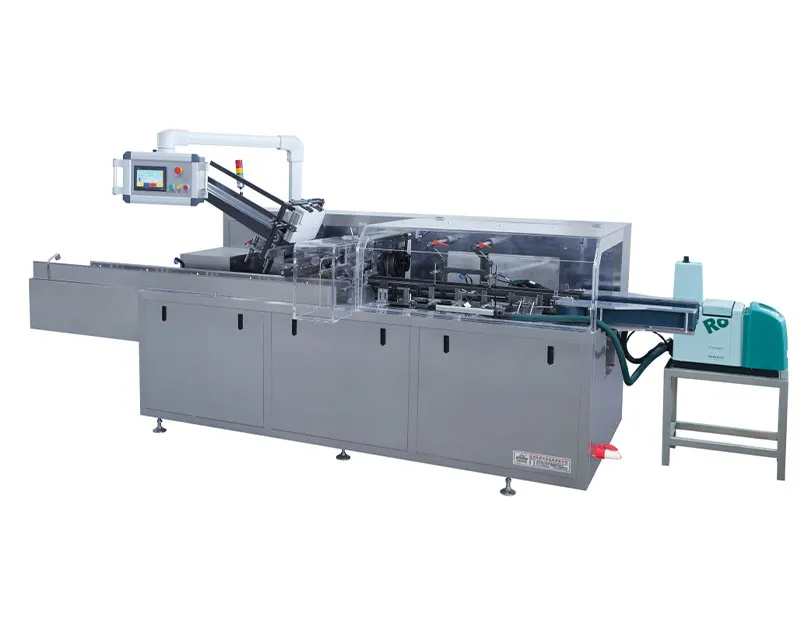
To see how different speed classes translate into real-world applications, you can compare the design philosophy behind automated cartoning platforms designed for sustained high-volume production.
View our Automated Cartoning Machine Product Series→
The most common mistake in high-speed cartoner selection is evaluating the cartoning station in isolation. In practice, the infeed system—how products enter the machine—is the primary constraint on achievable speed. A high-speed carton packer running at 200 boxes/min means nothing if your upstream counting or collation system cannot deliver stable product groups at that rate.
Configuration 1: Manual or semi-automatic infeed
Products are placed onto an infeed conveyor by operators
Realistic sustained speed: 30-50 boxes/min maximum
Bottleneck: human reaction time and consistent placement accuracy
Best for: Low-volume lines, contract packaging with frequent product changes
Configuration 2: Automatic counting and collation
Sensors count products (e.g., blister packs, sachets, bottles) and group them into collations
Realistic sustained speed: 80-150 boxes/min depending on product stability
Bottleneck: sensor accuracy and product orientation control
Best for: Medium-to-high volume lines with consistent product formats
Configuration 3: Robotic pick-and-place infeed
Delta or articulated robots pick products from a conveyor and place them into carton pockets
Realistic sustained speed: 120-250 boxes/min for suitable products
Bottleneck: pick-and-place cycle time and end-effector design
Best for: High-volume lines with delicate, irregular, or randomly oriented products
The relationship is simple: your cartoner's real speed = your infeed system's reliable output speed. Selecting a cartoner with a rated speed 50% higher than your infeed can deliver waste capital and create maintenance overhead from running a large machine at low utilization.
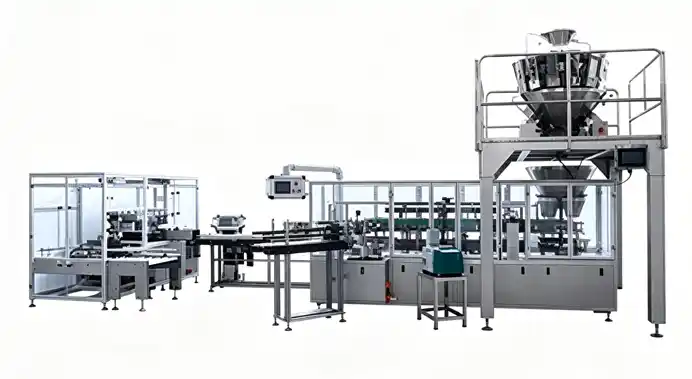
Use this structured approach to evaluate options without being distracted by marketing claims.
Start with your production plan, not a machine's maximum rating.
| Question | Your Answer |
|---|---|
| What is your highest-volume product's daily target (good cartons)? | ______ |
| How many shift hours are available per day? | ______ |
| What is your target OEE (typically 70-85% for well-run lines)? | ______ |
Formula: Required machine sustained speed = (Daily target good cartons) ÷ (Shift hours × OEE)
Example: 80,000 cartons/day ÷ (16 hours × 75% OEE) = 80,000 ÷ 12 = 6,667 cartons/hour = 111 boxes/min required sustained speed. This means you should look for a machine rated at 140-150 boxes/min maximum, not 200+ boxes/min.
Create a table listing every product you run or plan to run:
Minimum carton size (length × width × height)
Maximum carton size
Product type (bottle, blister pack, sachet, tube)
Estimated annual volume
Then ask each supplier: "What is the sustained speed for this specific product at minimum and maximum size?" A machine that runs 200 boxes/min for medium sizes may drop to 80 boxes/min for very small or very large formats.
High speed is worthless if changeovers consume 4 hours between batches. For each candidate machine:
Request video of a complete changeover (not just a time claim)
Ask for the changeover process documented step by step
Confirm whether change parts are tool-free or require wrenches
Verify that size recipes are stored electronically
For pharmaceutical or high-mix food lines, changeover targets should be under 30 minutes for two-person operation. For dedicated high-volume lines running one product 24/7, changeover speed is less critical.
When a high speed cartoner jams, how quickly can it recover? Ask:
Does the machine have accessible jam clearance doors on both sides?
Are sensors able to distinguish between missing product (reject) versus jammed product (stop)?
After a stop, does the machine automatically resynchronize or require manual indexing?
A machine that takes 10 minutes to clear each jam will lose 1 hour of production per 6 jams. At 150 boxes/min, that is 9,000 lost cartons per hour of downtime.
Your cartoner does not operate alone. Request:
Communication protocol documentation (EtherNet/IP, PROFINET, or OPC UA preferred for most modern lines)
Confirmation of physical interface dimensions (infeed height, outfeed direction)
A commitment to a line integration test during Factory Acceptance Test (FAT)
External source: A 2024 technical guideline from the International Society of Automation (ISA) notes that packaging lines using open communication standards (EtherNet/IP, PROFINET, OPC UA) experience 40% shorter integration timelines compared to lines relying on proprietary protocols. This directly reduces your commissioning risk.
Real-world selection depends heavily on your specific production environment. Here are two common scenarios.
Profile:
One primary product format (e.g., 200g cereal cartons)
24/5 production schedule (120 hours/week)
Minimal changeovers (once per week or less)
Upstream: high-speed vertical form fill seal (VFFS) machine
Critical specifications:
Rated maximum speed at least 25% above required sustained speed
Continuous motion cartoner (vs. intermittent) for smoother high-speed operation
Heavy-duty construction for 24/7 duty cycle
Quick-access jam doors rather than quick-changeover features
What matters less: Motorized changeover, recipe storage for 100+ products, ultra-fast changeover tooling.
Profile:
15-20 different product SKUs per week
Batch sizes ranging from 5,000 to 100,000 cartons
Frequent changeovers (2-4 per day)
Upstream: blister machine or bottle filler running multiple formats
Critical specifications:
Intermittent motion or servo-driven continuous motion with recipe storage
Tool-less or one-tool changeover under 20 minutes
Open frame design for visual inspection and cleaning
Serialization-ready with reject confirmation logging
What matters less: Maximum speed above 150 boxes/min; sustained speed of 80-100 boxes/min is usually sufficient.
For facilities running both large commercial batches and high-mix contract packaging, the balance between speed and flexibility requires careful evaluation. You can explore application-specific considerations for different production environments. View Packaging Solutions for Food & Beverage and Pharmaceutical Product Applications.
By now, you have a framework built on real throughput calculation, infeed compatibility, changeover requirements, and integration readiness. The next step is organizing these requirements into a structured request for information (RFI) that you can send to multiple suppliers.
Before requesting detailed quotations, prepare:
Your throughput calculation sheet (daily target, shift hours, target OEE)
Product dimension table (all SKUs with min/max sizes and annual volumes)
Infeed description (current upstream equipment make/model and output rate)
Changeover frequency (average number per day/week and target changeover time)
Integration requirements (communication protocol, physical layout drawing)
With this package prepared, you are positioned to evaluate supplier responses based on documented capabilities rather than marketing claims.
For a deeper understanding of how motion type (continuous vs intermittent) affects real-world performance in high-speed applications, review available technical literature on cartoner drive systems.
As a next step, you can explore the KAIXIANG cartoning packing machine, or look forward to our upcoming article comparing continuous-motion versus intermittent-motion cartoners for high-volume lines.
If this selection framework was useful, the following articles will help you complete your cartoner evaluation and integration planning:
Continuous-Motion vs Intermittent-Motion Cartoners: Speed, Stability, and Maintenance Trade-offs
Calculating Your True OEE for Cartoning Lines
Infeed System Design for High Speed Cartoners
Changeover Optimization: Reducing Downtime Between Batches
Communication Protocols for Integrated Packaging Lines
Sep 14,2026 
GET A QUOTE