

 May 27
When you're responsible for bringing a new pharmaceutical product to market—or upgrading an existing packaging line—ensuring that your cartoning equipment meets current Good Manufacturing Practice (cGMP) requirements often becomes a critical bottleneck. Specifications like "stainless steel construction" and "washdown rating" appear on every datasheet, but what actually matters for regulatory inspection readiness?
This article provides a decision framework for quality assurance and engineering leaders. You will learn how to translate GMP documentation requirements into machine selection criteria, understand the difference between compliance features that matter versus those that simply add cost, and identify the validation documents you should request before any purchase decision.
Pharmaceutical GMP regulations (such as 21 CFR Part 211 in the US, EU GMP Volume 4, and WHO TRS 961) focus on three operational realities: preventing mix-ups, ensuring cleanability, and maintaining traceability. According to a 2022 technical guide published by the International Society for Pharmaceutical Engineering (ISPE), inadequate changeover procedures and difficult-to-clean machine geometries remain among the top citation findings during packaging line inspections.
Here is how each GMP area translates into concrete cartoner evaluation criteria:
| GMP Requirement | What It Means for an Automatic Cartoner | Why This Matters to Your Daily Operation |
|---|---|---|
| Prevention of cross-contamination & mix-ups | Tool-free changeover parts, product-specific change part identification, and electronic presence sensors for each lane | Reduces the risk of leftover blister packs from the previous batch entering current cartons; cuts changeover time from hours to minutes |
| Cleanability & absence of harborage points | Rounded internal corners, removable guards, washdown-rated electrical enclosures (IP65 or higher), and documented surface roughness (Ra ≤ 0.8μm for product contact areas) | Enables effective cleaning validation without disassembling the entire machine; lowers risk of microbial or particulate residue |
| Traceability & line clearance | Reject station confirmation, counted rejection logging, and integration capability with serialization/aggregation systems | Provides auditable proof that defective or test cartons were removed; supports track-and-trace mandates (e.g., DSCSA in the US, FMD in Europe) |
A 2023 industry benchmark analysis by the Parenteral Drug Association (PDA) noted that packaging lines with dedicated change parts bearing 2D data matrix codes reduced changeover errors by 67% compared to those using mechanical-only coding. This directly supports the GMP requirement for "documented and validated changeover procedures."
To understand how modular change part design is implemented in different throughput ranges, you may review structural approaches used for machines designed for high-speed continuous motion versus those suitable for smaller batch sizes.
Learn more: View our Automated Cartoning Machine Product Series
Regulatory bodies expect your equipment qualification to follow a standard V-model (Design Qualification → Installation Qualification → Operational Qualification → Performance Qualification). Use this checklist to evaluate any automatic cartoner against GMP documentation expectations before signing specifications.
Step 1: Verify Design Qualification (DQ) documentation is product-specific.
A generic DQ template is insufficient. Ask for a DQ that lists:
Your proposed product dimensions (carton and blister/bottle)
Minimum and maximum machine speeds in your batch sizes
Materials of construction certificates (e.g., 316L stainless steel for product contact parts)
Contact surface roughness values with measurement locations
Step 2: Confirm that sensors provide verifiable presence checks.
GMP requires that missing or skewed products are automatically rejected. Walk through a typical cycle: a sensor should detect each blister pack or bottle entering the infeed. If it fails, the machine must reject that incomplete carton and log the reject event. Without this logging, you cannot prove line clearance during an audit.
Step 3: Assess how change parts are stored and identified.
Ask to see the change part storage cart and identification system. For GMP, each change part set for a specific product size must be:
Clearly labeled (product name, size, date of last inspection)
Stored to prevent damage (scratches create harborage points)
Protected from cross-use with other products without sanitization
Step 4: Request the FAT (Factory Acceptance Test) protocol and execute a mock batch.
During the FAT, run placebo product for at least 30 minutes at your planned speed. Then immediately perform a visual cleanliness check inside the machine. If powder or residue remains in crevices after normal production, the machine will require excessive cleaning validation work.
Step 5: Validate that reject counting matches total rejects.
At the end of the test batch, compare: total cartons produced + total rejects in the bin = total cartons fed. Any discrepancy (e.g., "phantom rejects") indicates a counting flaw that will complicate your annual product review.
External source: The European Medicines Agency's "Questions and Answers on Good Manufacturing Practice" (EMA/INS/GMP/542821/2019) specifically states that "reject confirmation systems should be designed to prevent inadvertently reintroducing rejected units." A sensor that only detects but does not confirm removal does not fulfill this requirement.
Different production environments place different demands on a GMP-compliant cartoner. Here are two common scenarios from real-world pharmaceutical facilities.
Batch size: 500,000+ cartons per batch
Critical GMP need: Rapid, validated changeover between two or three blister sizes
Key specification: Motorized changeover with recipe storage (not manual repositioning). Each recipe should include torque values for sealing stations.
Why this matters for you: Manual changeover creates high risk of misadjustment, leading to open or crushed cartons. Electronic recipe changeover provides traceable records that you can attach to batch documentation.
Batch size: 50–5,000 cartons per batch
Critical GMP need: 100% visual inspection capability and easy line clearance between different trial formulations
Key specification: Open machine architecture with fold-down guards and a reject verification system that can handle frequent material changes
Why this matters for you: Clinical packaging often involves blinding (concealing treatment identity). Your cartoner must allow complete cleaning between different blinded kits without leaving old labels or inserts.
For facilities running both large commercial batches and small clinical trial lots, the choice between dedicated high-speed lines and flexible low-volume platforms is critical. You can explore how different automation levels apply to mixed-volume environments in our industry applications.
Learn more: View Packaging Solutions for Pharmaceutical Products and other relevant application areas

Now that you have a GMP decision framework based on three core areas (mix-up prevention, cleanability, traceability) and a five-step validation checklist, the next logical step is mapping your batch sizes, product formats, and available clean room space to specific machine configurations. Not every GMP requirement demands the highest speed or the most expensive sensor suite—but every requirement does demand documented evidence that your machine can deliver what the regulation expects.
Before you request quotations, prepare three documents:
Your product portfolio (dimensions, materials, annual volumes)
Your clean room or packaging room classification (ISO 7, ISO 8, or unclassified)
Your target OEE (Overall Equipment Effectiveness) and allowed changeover frequency
With these in hand, comparing detailed technical specifications becomes a meaningful exercise rather than a feature comparison. You can review how different cartoner platforms accommodate pharmaceutical-grade validation documentation, change part identification systems, and reject confirmation logic.
For a deeper look at how production speed and cleanability trade off in cartoner design, we recommend reviewing available technical literature on motion types and their impact on GMP cleaning cycles. or look forward to our upcoming article comparing continuous-motion vs. intermittent-motion cartoners for GMP cleaning validation.
If you found this GMP framework useful, the following articles will help you build a complete packaging qualification strategy (these are suggested topics for future content, forming a topic cluster):
Validating Cartoner Changeover for Multi-Product Lines
Environmental Monitoring Points on Automatic Cartoners
From FAT to IQ/OQ/PQ: A Timeline for Cartoner Installation
Material Certifications You Should Request from Cartoner Suppliers
Serialization-Ready Cartoners: How to Evaluate Communication Protocols
Sep 14,2026
Aug 31,2026 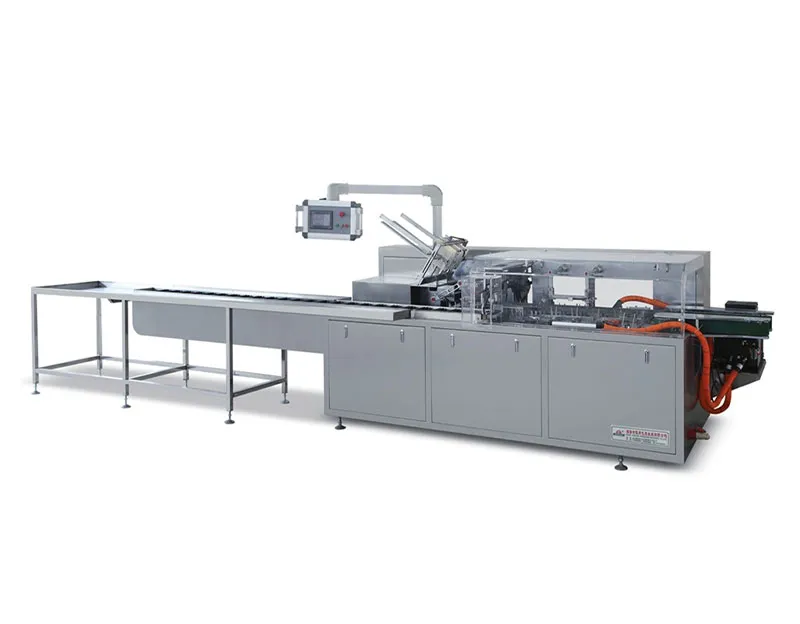
GET A QUOTE